
Panoramic Padel Court Compliance: Wind, Glass & Roof Checks Before Signing
Panoramic Padel Court Compliance: Wind, Glass & Roof Checks Before Signing
A covered panoramic court is only as compliant as the documents that travel with it. Wind resistance, tempered glass and roof fabric are the three areas where a catalogue sentence most often replaces a verifiable specification — and the three areas that are hardest and most expensive to correct once the court is standing. This guide explains what each claim actually obliges a supplier to prove, and uses the LDK-PADEL-RF01 panoramic padel court with roof as a concrete reference for the numbers a buyer should expect to see in a submittal package.
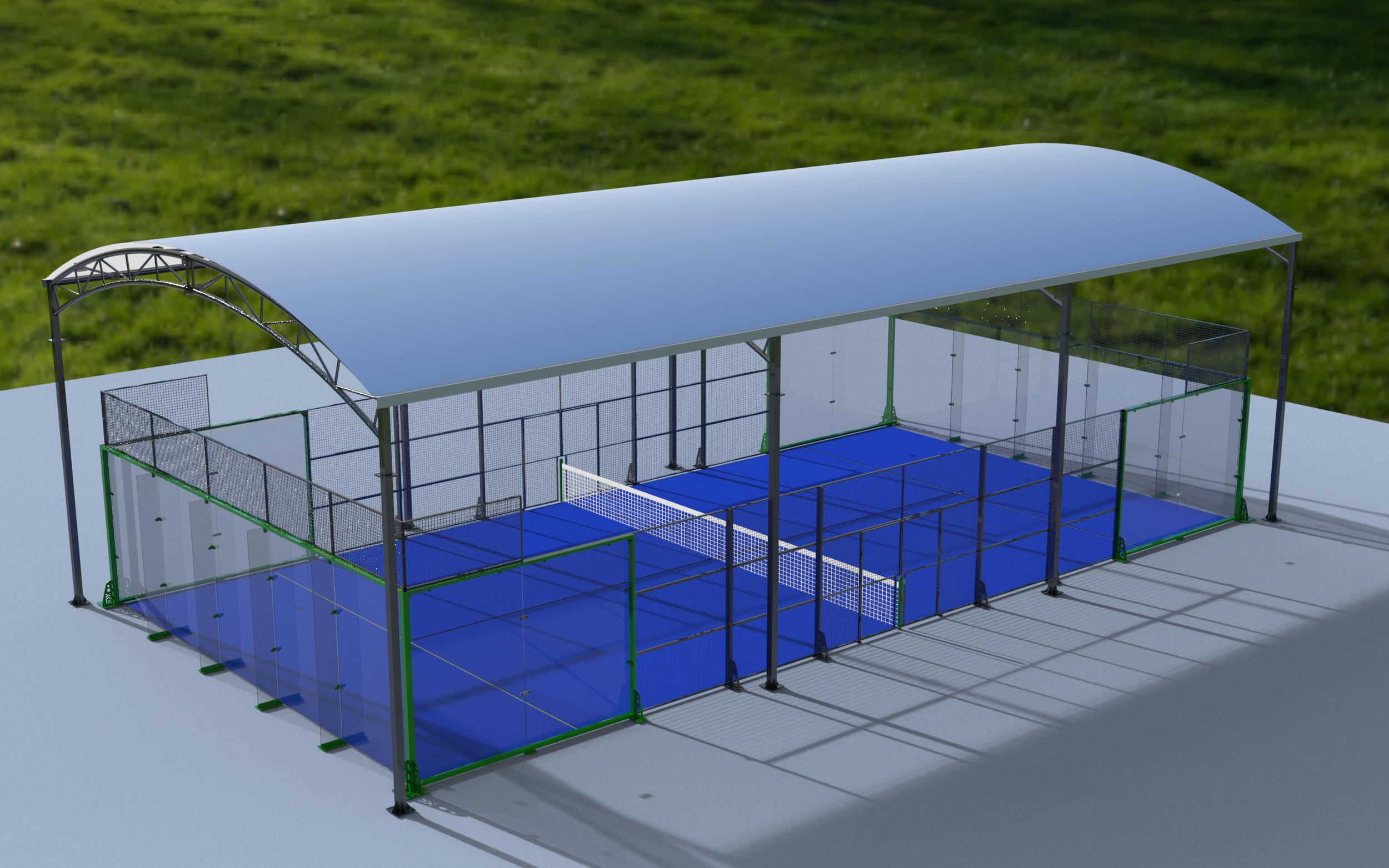
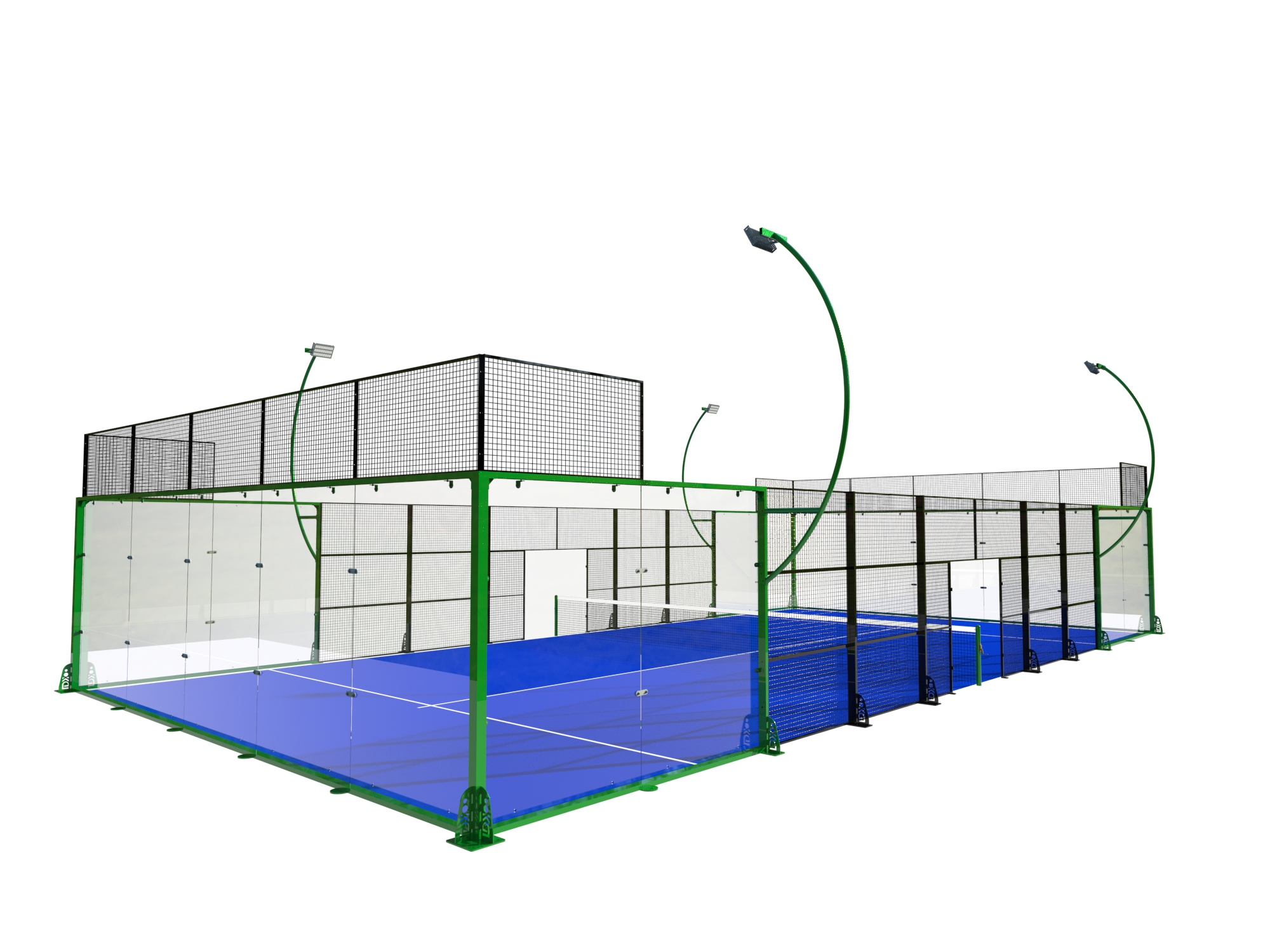
Shenzhen LDK Industrial Co., Ltd. — trading as LDK — is a sports equipment manufacturer headquartered in Shenzhen, China, with a 50,000 m² manufacturing base in Cangzhou and a 4,500 m² R&D and production base in Huizhou, supplying padel, squash, football, basketball and pickleball courts to export markets. Its roofed panoramic model, LDK-PADEL-RF01, is specified as a 20 m × 10 m court with 7 m eaves height, 9.2 m ridge height, 12 mm tempered glass walls and a 750 g/m² double PVC-coated PVDF roof membrane.
Every figure in this article attributed to LDK is a manufacturer-stated value from LDK's own product documentation, not an independent laboratory result. That distinction is exactly what the article is about: the job of a buyer is to convert manufacturer statements into contractual evidence before the deposit is paid.
Why a Roofed Panoramic Court Needs a Different Compliance Check
An open padel court is essentially a glazed box. Add a roof and you are no longer buying a glazed box — you are buying a structure that carries a membrane at 7 to 9.2 metres above the slab, a glazing system that now shelters players from something overhead, and a fabric component with a finite replacement cycle.
Three consequences follow directly, and each one changes what the contract must contain:
- Wind load moves from the posts to the whole frame. A membrane roof at ridge height catches wind across a much larger effective area than glass panels alone, so the governing question becomes the steel section schedule, the bolted connections and the foundation — not the panel count.
- Glass stops being purely a playing surface. It becomes a protective barrier, which makes the evidence trail for thickness, tempering and breakage behaviour part of the safety file rather than a marketing detail.
- The fabric is a consumable. A membrane with a stated service life of 10 to 15 years will outlive some ownership periods but not the steel frame. The buyer needs to know who specifies and supplies the replacement, and to what standard.
What "Compliance" Covers — and What It Does Not
The International Padel Federation rules define the playing envelope, and those definitions are the correct starting point for any specification. Under the FIP rules of padel, the court is a rectangle 10 metres wide by 20 metres long measured as interior dimensions, with a 0.5% tolerance. Minimum height must be 6 metres throughout the court with no obstructing elements. The net must be 10 metres long, 0.88 metres high at the centre rising to 0.92 metres at the ends, with a maximum tolerance of 0.005 metres. The court must be completely enclosed.
Document-status note: the FIP rules edition identified for this reference is dated 2025. Confirm the current edition and its effective status with the governing body before you cite a rule number in a signed contract.
Notice what those rules do not cover. They do not certify a wind resistance class, a glass impact performance level, a roof fabric weight, a corrosion coating thickness, an electrical installation or a fire performance class. In most markets there is no single "padel court construction standard" that resolves all of these at once. Structural loads, foundation design, drainage, electrical work and fire safety are normally governed by the local building authority and must be signed off by a licensed local engineer for the specific site.
That gap is precisely where procurement risk lives. Because no single certificate covers the whole assembly, a court is compliant only when each claim in the quotation is traceable to a named document, a named standard and a named model. Vague assurances at quotation stage become unresolvable disputes at acceptance.
Market Context: More Suppliers, More Reason to Verify
Demand pressure is the reason specification discipline matters more now than it did five years ago. The International Padel Federation and the Playtomic / PwC Global Padel Report describe a sport that has expanded approximately six-fold since 2016 and is forecast to exceed 91,000 courts globally by 2028. Separately, commercial research reported by Business Research Insights values the global padel court market at USD 0.5 billion in 2026, reaching USD 1 billion by 2035 at a reported CAGR of 8.1%; that figure is commercial research whose public methodology is not disclosed, so treat it as directional rather than as a statistic to build a business case on.
The procurement implication is straightforward. Rapid growth attracts new fabricators, and the same words — "panoramic", "tempered", "PVDF", "typhoon rated" — are used across a very wide quality range. When terminology is not standardised, verification is the only lever a buyer controls.
Check 1 — Wind Resistance: Turning "Level 10~13 Typhoon" into Evidence
What the rating actually claims
LDK specifies the wind resistance of the LDK-PADEL-RF01 as Level 10~13 typhoon. On the Beaufort wind scale that spans storm through hurricane-force conditions. Read correctly, that is a statement about the steel frame and its connections under a defined load case. It is not a statement about the fabric membrane, the glass, the anchors or the foundation, and it does not automatically satisfy the design wind pressure required by your local code.
The five documents that make the claim verifiable
- Site design wind pressure. Obtain the design wind load for the actual plot from the local authority or a licensed structural engineer. This is the number every other document must answer to.
- A sealed structural calculation report. It must be produced for the exact geometry being supplied — for LDK-PADEL-RF01 that means 20 m × 10 m with 7 m eaves and a 9.2 m ridge. A calculation for a different height or span does not transfer.
- A member schedule that matches the calculation. LDK-PADEL-RF01 lists corner columns of 150×200×4 mm hot-galvanized steel tube (8 pieces), middle columns of 100×50×3 mm steel tube (12 pieces), beams in Φ102 / Φ89 / Φ40 × 3 mm hot-galvanized steel tube, and cross tubes of 100×50×3 mm in 4 m and 6 m lengths (16 pieces), all joined with high-strength bolts. If the delivered frame shows thinner sections than the calculation assumed, the wind rating no longer applies to what you received.
- Foundation and anchor design. Base plates, anchor type, embedment and concrete grade must be designed for the uplift the roof generates. This is a local engineering deliverable, not a supplier default.
- Corrosion protection records. LDK specifies hot-dip galvanizing plus electrostatic epoxy powder coating at 70~80 μm. Ask for measured coating thickness records, because the coating is what keeps the rated section thickness intact over the service life — particularly on coastal sites.
Where the claim stops
A wind class is an envelope, not a guarantee. Site exposure — open ground, coastal frontage, elevation, surrounding buildings — changes the real load the court sees, which is why the local calculation governs. The rating also does not cover the membrane, which can be removed or damaged by wind even when the frame survives. If a quotation uses phrases such as "typhoon proof" or "hurricane proof" without a calculation reference, treat that as a signal to request the report rather than as reassurance.
Check 2 — Glass: 12 mm Tempered and the Report Behind It
What LDK-PADEL-RF01 specifies
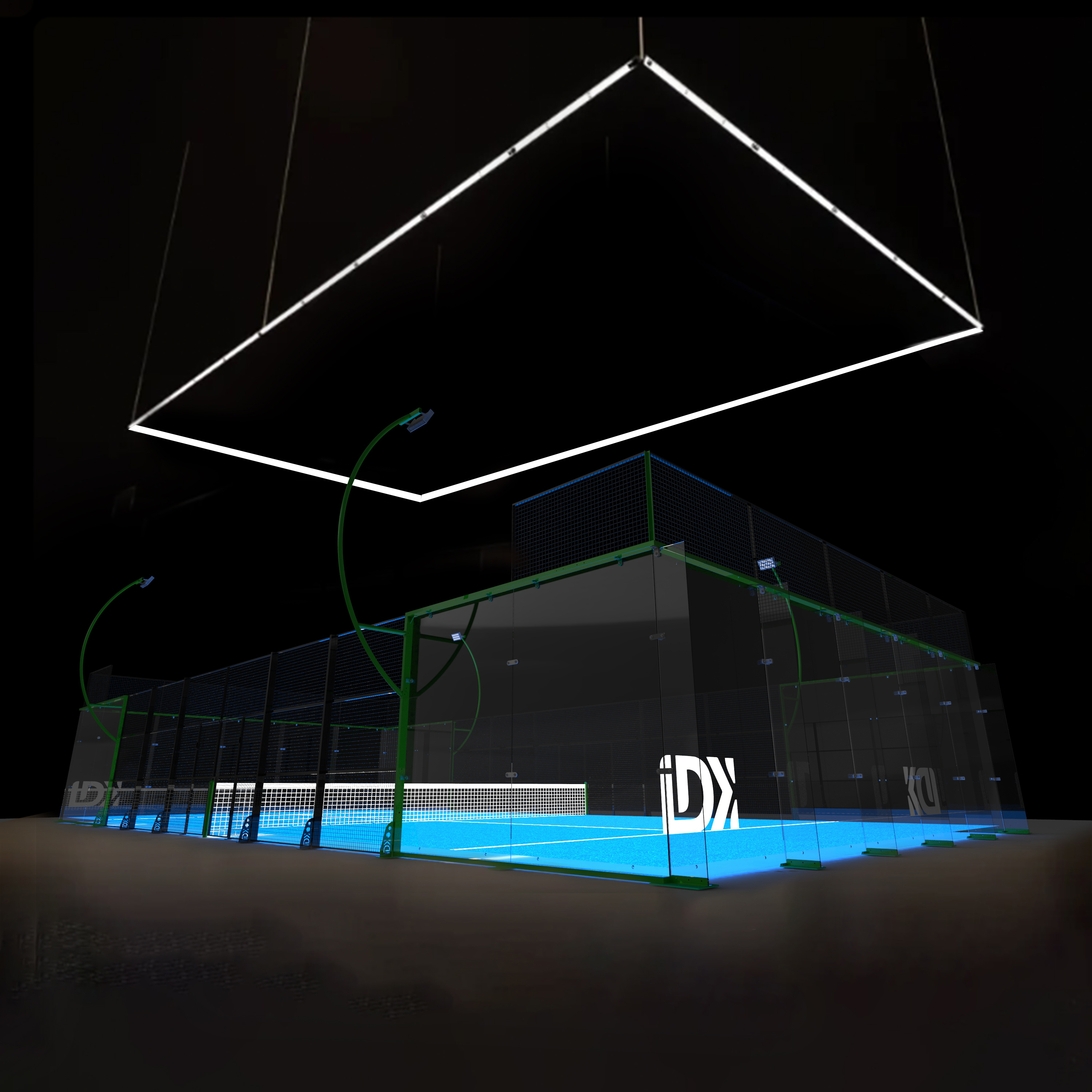
The enclosure on LDK-PADEL-RF01 is built from 12 mm thick safety tempered glass in 1,990 × 2,980 mm panels, 18 pieces per court, combined with 1 × 2 m wire mesh panels of 4 mm wire and 50 × 50 mm apertures, 46 pieces per court. On LDK's standard padel court model LDK-PD01, LDK documents the same 12 mm, 1,990 × 2,980 mm ultra-clear tempered safety glass as carrying a stated spontaneous breakage rate of 1 in 10,000 — a manufacturer statement that should be read as LDK's own characterisation of its glass supply, not as a third-party finding.
Two different certificates, two different questions
LDK holds two conformity records that are frequently confused with each other, and the distinction matters when you write the submittal list:
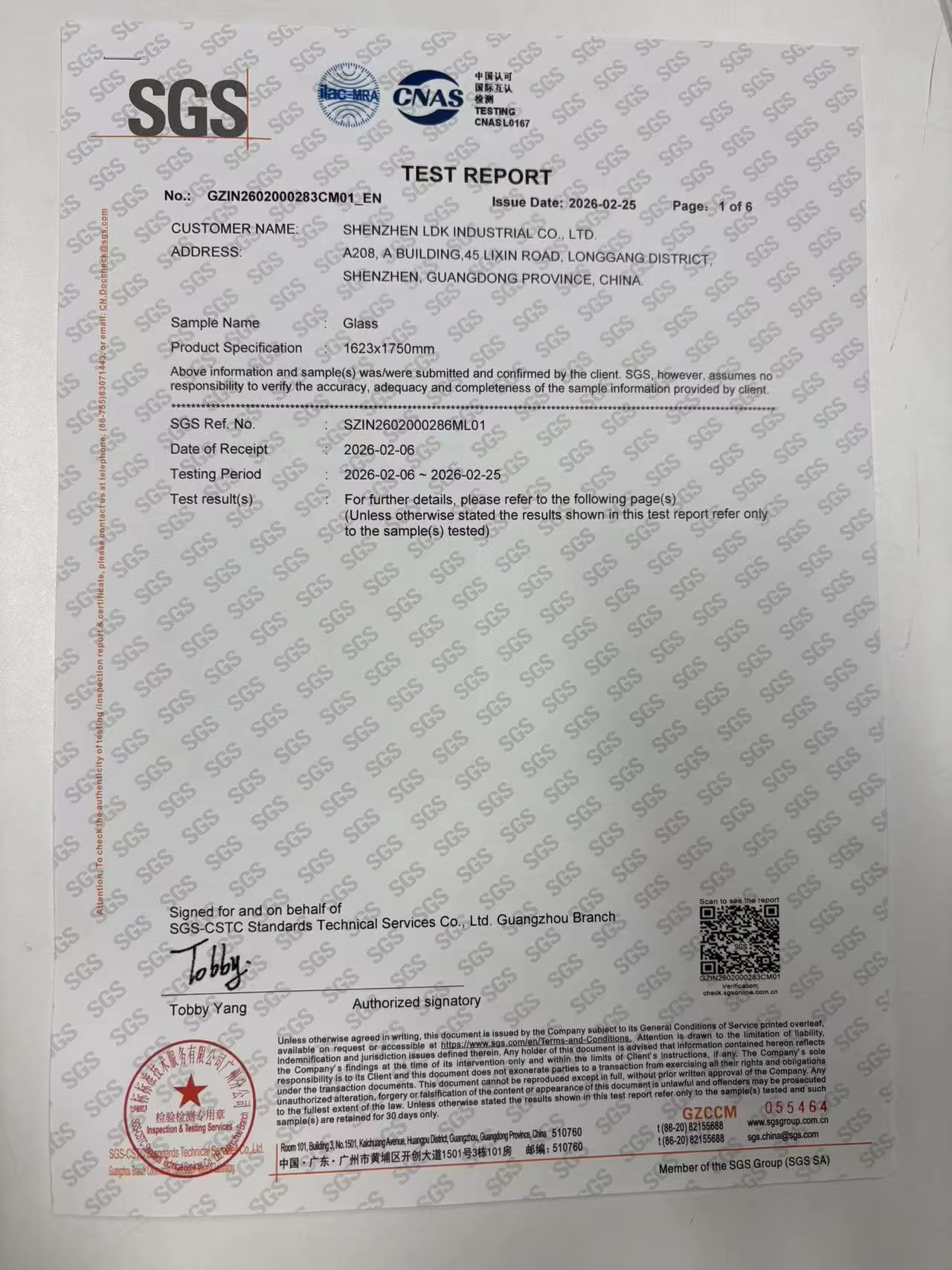
- Glass Test Report AS 2208:2023+A1:2024, certificate number GZIN2602000283CM01_EN, issued 25 February 2026 by SGS-CSTC Standards Technical Services Co. Ltd. Guangzhou Branch, with an Australia / New Zealand market scope. AS 2208 is a glass standard, so this report answers the question "does this glass meet the named glass standard".
- Verification of Conformity CTGS250305116EC, issued 13 March 2025 by Jiangxi CTGS Testing Service Co., LTD with a European Union scope, assessed against EN ISO 12100:2010. EN ISO 12100 is a machinery-safety standard covering risk assessment and design principles. It answers a different question about the equipment as a machine, and it is not a glass impact test.
Accepting one as evidence of the other is a common procurement error. Both records are linked to LDK's LDK-PD01 court in LDK's documentation. If you are ordering LDK-PADEL-RF01, request written confirmation that the glass report covers the panels actually supplied, rather than assuming the link transfers across models.
Panel-level questions to put in the submittal
- Does the report cover the supplied thickness and the supplied panel size, including the edge finish?
- Is the certificate holder the same legal entity that will sign your contract and issue the invoice?
- Is it a type test on a representative sample or a project-specific test on production panels?
- How are panels marked and traced to the batch on site, so acceptance inspection can match glass to paperwork?
- Are setting blocks, gaskets and expansion allowances specified, since these determine whether a correctly certified panel survives thermal movement in service?
Check 3 — Roof Fabric: 750 g/m² PVDF and the 10–15 Year Claim
Reading the fabric specification correctly
LDK specifies the roof of the LDK-PADEL-RF01 as 750 g/m² double PVC-coated PVDF material with a service life of 10–15 years. Each element of that sentence does a specific job, and buyers routinely collapse them into one another:
- 750 g/m² is fabric weight per square metre. It is not tensile strength, tear strength or coating adhesion, and a heavier fabric is not automatically a stronger membrane.
- Double PVC-coated describes coating applied to both faces of the base cloth, which affects handling, seam behaviour and water resistance.
- PVDF is the fluoropolymer finish normally associated with dirt shedding and colour retention over time.
- 10–15 years is a stated material service life under stated conditions. It is not a warranty of the complete roof assembly, which also depends on seams, tensioning hardware, fixings and installation quality.
What to ask for
- The fabric datasheet, naming the base cloth, total weight, tensile and tear strength, coating adhesion, UV and colour-fastness data, and the operating temperature range.
- The fire performance classification applicable in your destination market, referenced to the standard that market recognises.
- The warranty document, with its conditions — UV exposure limits, cleaning regime, snow and hail exclusions, and what remedy applies if the membrane fails inside the stated period.
- The attachment and drainage detail: how the membrane is tensioned and fixed to the Φ102 / Φ89 / Φ40 × 3 mm beams, where gutters run, and how ponding is prevented at the low point of the roof.
- The replacement specification, because a 10–15 year membrane will be replaced at least once during the life of a well-built steel frame. The contract should state who supplies the replacement and to what specification, so the second purchase is not a re-engineering exercise.
The Rest of the Envelope: Geometry, Net, Lighting and Surface
Wind, glass and fabric carry the highest risk, but four further checks decide whether the court is playable and acceptable on handover.
- Playing dimensions. The FIP interior rectangle is 10 m × 20 m with a 0.5% tolerance, measured as an interior playing area. LDK-PADEL-RF01 is specified as 20 m × 10 m. The practical question is whether a quoted dimension refers to the interior playing area or the total installed footprint — the exterior footprint is larger once the enclosure structure is included. Put both figures on the drawing so the slab, drainage and setback allowances are sized correctly.
- Clear height. The FIP minimum is 6 m clear throughout the court with no obstructing elements. LDK-PADEL-RF01 provides 7 m at the eaves and 9.2 m at the ridge, which comfortably exceeds the rule at the edges — but the check is whether cross tubes, lighting brackets or net posts intrude into the 6 m envelope above the playing area. That is answered on the section drawing, not on the specification sheet.
- Net specification. The FIP net is 10 m long, 0.88 m high at the centre and 0.92 m at the ends, with a 0.005 m tolerance. The LDK-PADEL-RF01 accessory package lists a 980 mm high tennis post set and a 10 m × 970 mm knotted PP net with 4 mm rope and 50 × 50 mm mesh. Because the package describes a post height and a net height, the contract should state the measurement basis — unstretched net height, post height, or centre height in play — so acceptance testing is unambiguous.
- Lighting and surface. The 200 W LED fixture rated IP65 on a 100×50×3 mm column is a fixture rating, not a lighting design; request the photometric layout and confirm it against the local electrical code. For the surface, LDK-PADEL-RF01 lists blue artificial grass at 12 mm pile, 63,000 tufts/m², 9000D with PP+NET backing, while LDK's separately listed padel grass model LDK1231625.4-ST3 is specified at 12 mm pile, 9000 Dtex, 3/16" gauge, double PP + PU latex backing and 58,800 stitches/m² (±10%), available in blue, red, green, pink and black. The two records use different density units and different backing constructions, so the contract must name the exact grass model rather than "12 mm blue grass".
Verification Matrix: What to Compare, Line by Line
The table below converts the discussion above into a comparison sheet. The reference column shows the LDK-PADEL-RF01 stated value so a buyer can see the level of detail a submittal should contain; it is not a benchmark that other suppliers must match, because different configurations can be legitimately compliant in different ways.
| Check | LDK-PADEL-RF01 reference | Document to request | What goes wrong without it |
|---|---|---|---|
| Wind resistance | Level 10~13 typhoon | Sealed structural calculation for site design wind load | The rating cannot be tied to your site |
| Steel sections | 150×200×4 mm corners (8 pcs); 100×50×3 mm middles (12 pcs); Φ102/Φ89/Φ40 × 3 mm beams; 16 cross tubes | Member schedule and approved shop drawings | Delivered frame may differ from the rated frame |
| Corrosion protection | Hot-dip galvanizing + electrostatic epoxy powder coating, 70~80 μm | Measured coating thickness records | Accelerated corrosion, especially coastal |
| Glass specification | 12 mm tempered, 1,990 × 2,980 mm, 18 pcs | Glass test report covering supplied thickness and size | No verified evidence of glass performance |
| Glass documentation | AS 2208:2023+A1:2024 report GZIN2602000283CM01_EN (SGS-CSTC, 25 Feb 2026, AU/NZ scope) | Copy of report plus holder confirmation | Report may not cover your market or your panels |
| Equipment conformity | Verification of Conformity CTGS250305116EC against EN ISO 12100:2010 (Jiangxi CTGS, 13 Mar 2025, EU scope) | Scope statement clarifying what the document does and does not certify | Machinery-safety compliance mistaken for glass testing |
| Roof fabric | 750 g/m² double PVC-coated PVDF | Fabric datasheet with weight, strength, fire class, UV data | A weight figure standing in for performance data |
| Roof service life | 10–15 years stated | Warranty document with conditions and remedy | Service-life claim with no contractual recourse |
| Playing dimensions | 20 m × 10 m | Drawing showing interior playing area and total footprint | Slab, drainage and setbacks sized incorrectly |
| Clear height | Eaves 7 m, ridge 9.2 m | Section drawing marking the 6 m clear envelope | Obstruction inside the playing volume |
| Enclosure layout | 18 glass panels + 46 mesh panels | Elevation drawing showing glass versus mesh | Incomplete enclosure or unexpected open sections |
| Warranty and schedule | 1–5 years warranty; 30–45 days lead time; 200 units/month capacity | Warranty terms plus a dated delivery schedule | Handover and after-sales risk transferred to you |
What Belongs in the Signed Contract and Submittal Package
Before signature, the following items should either be attached to the contract or named in it as conditions of acceptance. Anything that cannot be produced at this stage is unlikely to appear voluntarily after the deposit is paid.
- Named models, not categories. Write "LDK-PADEL-RF01" and "LDK1231625.4-ST3" — or whichever models you are buying — into the document, so substitution requires a written variation rather than a conversation on site.
- Sealed structural calculations for the supplied geometry at the site design wind load, plus the foundation and anchor design signed by the local engineer.
- The glass test report by number and issuing laboratory, with a statement of the panels and thickness it covers.
- The fabric datasheet and warranty terms, including the replacement membrane specification.
- Approved shop drawings showing interior dimensions, total footprint, the 6 m clear envelope, and the glass-versus-mesh layout on every elevation.
- Inspection and acceptance criteria. LDK states 100% testing and a 1–5 year warranty; the contract should define what is inspected at the factory, what is inspected on site, and what constitutes acceptance.
- Delivery and capacity commitments. LDK states a lead time of 30–45 days, monthly capacity of 200 units and a minimum order of 1 unit. If you are planning a multi-court rollout, put the schedule in the contract rather than in an email.
- Import classification. US Customs and Border Protection ruling NY N336509, effective 30 November 2023, classifies a complete unassembled padel court — steel structure, safety glass panels, artificial turf and lighting — under HS 9506.99.6080. Confirm classification for your own destination and component split before you finalise landed cost, because courts can also be imported as separate components.
Where These Checks Change the Decision
The verification burden is not identical for every project. Three situations raise it sharply.
Coastal and high-wind venues. Here the wind calculation and the corrosion system dominate. A 70~80 μm galvanizing-plus-powder system must be shown to suit the local atmosphere and maintenance regime, and the site design wind pressure is likely to govern the steel schedule rather than the height of the court. Buyers should expect the structural calculation to be the single most expensive document in the submittal — and the one most often missing.
Year-round clubs in hot climates. The roof becomes a revenue asset, not a weather contingency, and the fabric becomes the wear item. UV and colour-fastness data, the warranty conditions, and clarity on who supplies the replacement membrane matter more than the initial fabric price, because a poorly specified membrane changes the club's maintenance budget mid-life.
Multi-court rollouts. Consistency across units is the risk, because a small specification change on unit fifteen is invisible until acceptance. LDK reports a 16-court padel club in Chile and a 70-court project in Bangladesh, both described as stable over 3 years, with the Bangladesh project cited as benefiting from FIP and CE certification; these are company-reported references, so treat them as leads for due diligence — request project contacts and inspect an installed court rather than relying on the description.
Frequently Asked Questions
What wind resistance rating should a roofed panoramic padel court have, and how is it proven?
There is no single international rating that applies everywhere. The governing figure is the design wind load set by the local building authority for that site, and the structure must be shown to resist it. LDK specifies LDK-PADEL-RF01 at wind resistance Level 10~13 typhoon, which describes storm through hurricane-force conditions on the Beaufort scale. Proof consists of a sealed structural calculation for the exact geometry — 7 m eaves and a 9.2 m ridge on LDK-PADEL-RF01 — a member schedule matching that calculation, including 150×200×4 mm corner columns, 100×50×3 mm middle columns, Φ102/Φ89/Φ40 × 3 mm beams and 16 cross tubes, and a foundation design signed by the local engineer.
Is 12 mm tempered glass sufficient, and which document proves it?
12 mm tempered safety glass is the thickness LDK specifies for LDK-PADEL-RF01, in 1,990 × 2,980 mm panels, 18 per court. The document to request is the glass test report itself. LDK holds report GZIN2602000283CM01_EN, issued 25 February 2026 by SGS-CSTC Standards Technical Services Co. Ltd. Guangzhou Branch against AS 2208:2023+A1:2024, with an Australia / New Zealand scope. Also request a written statement confirming that the report covers the thickness, panel size and edge finish actually supplied, because a report issued for one model does not automatically transfer to another configuration.
What does 750 g/m² double PVC-coated PVDF mean, and how long will the roof last?
750 g/m² is the fabric weight per square metre, "double PVC-coated" describes coating applied to both faces of the base cloth, and PVDF is the fluoropolymer finish normally associated with dirt shedding and colour retention. LDK states a service life of 10–15 years for the roof fabric on LDK-PADEL-RF01. That is a material service-life statement under stated conditions, not a warranty of the complete roof assembly. The contract should therefore carry the fabric datasheet, the warranty document with its conditions covering UV, cleaning, snow and hail, and the specification for the replacement membrane.
What drives the cost of a roofed panoramic court, and how should quotes be compared?
Cost is driven by the steel tonnage needed for the site's wind load, the area of 12 mm tempered glass versus wire mesh, the weight and coating of the roof fabric, lighting and electrical scope, foundation and drainage work, and installation labour. Because quotes are rarely issued against an identical specification, the only reliable comparison is a normalized one: fix the geometry, the design wind load, the glass thickness and panel count, the fabric weight and the warranty term inside the RFQ, then compare every quotation against that single specification.
Can we inspect a sample or reference project, and what lead time should we plan for?
LDK accepts orders from a minimum of 1 unit, which allows a single court to be used as a validation sample before a larger rollout, and states 100% testing with a 1–5 year warranty. Lead time is stated at 30–45 days, with monthly capacity of 200 units. For references, LDK reports a 16-court padel club in Chile and a 70-court project in Bangladesh, both described as stable over 3 years; these are company-reported references, so request project contacts and inspect an installed court directly. LDK's full specification and company brochure is available for download here: LDK Sports product brochure (PDF).
Planning a roofed panoramic court and want the specification checked before signing?
Send your site location, design wind load and required court count to LDK, and request the submittal package for Shenzhen LDK Industrial Co., Ltd. — including the structural calculation scope, the glass test report reference, and the roof fabric datasheet and warranty terms. Brochure and contact details: download the LDK Sports brochure.
Conclusion: The Signature Is the Last Cheap Decision
Panoramic courts with roofs fail procurement expectations for a small number of predictable reasons: a wind rating that was never tied to a site calculation, a glass report that covered a different panel or a different market, and a fabric service life quoted without a warranty behind it. None of those failures is detectable by looking at a photograph, and none of them is cheap to fix after installation.
The reference values in this guide — Level 10~13 typhoon wind resistance, 12 mm tempered glass in 1,990 × 2,980 mm panels, 750 g/m² double PVC-coated PVDF roof fabric with a stated 10–15 year service life on the LDK-PADEL-RF01 — show the level of detail a submittal should reach. They are manufacturer-stated figures and should be verified, not assumed. Used properly, they give a buyer a concrete checklist: confirm the calculation, confirm the report scope, confirm the fabric datasheet and warranty, and confirm the geometry on a drawing. Do that before signing, and compliance stops being a claim and becomes a document you can enforce.
Have Questions or Need More Details?
Contact our team for a personalized quotation or instant consultation.
Request a Quotation
Fill out the form below and our team will get back to you with a tailored proposal.
WhatsApp Direct Chat
Prefer to chat in real-time? Message us on WhatsApp for instant assistance & quick answers.
- Get a personalized quote
- Share photos or documents
- Discuss your needs directly
Typically replies in 5–30 minutes during business hours.