
Typhoon-Risk Padel Court Project? A Problem-Solving Guide to Wind-Resistant Specs
Building a padel court in a typhoon-exposed region is a structural project before it is a sports project. Wind, not play, decides whether the investment is still standing after its first three monsoon seasons.
Three things tend to go wrong when wind-resistant specifications are treated as an afterthought: the roof fabric fails first, the frame is under-specified for the additional wind-catching area that a canopy creates, and the anchorage is designed for the court's weight rather than for the uplift the roof generates. All three are preventable at the specification stage, and all three are expensive to correct after installation.
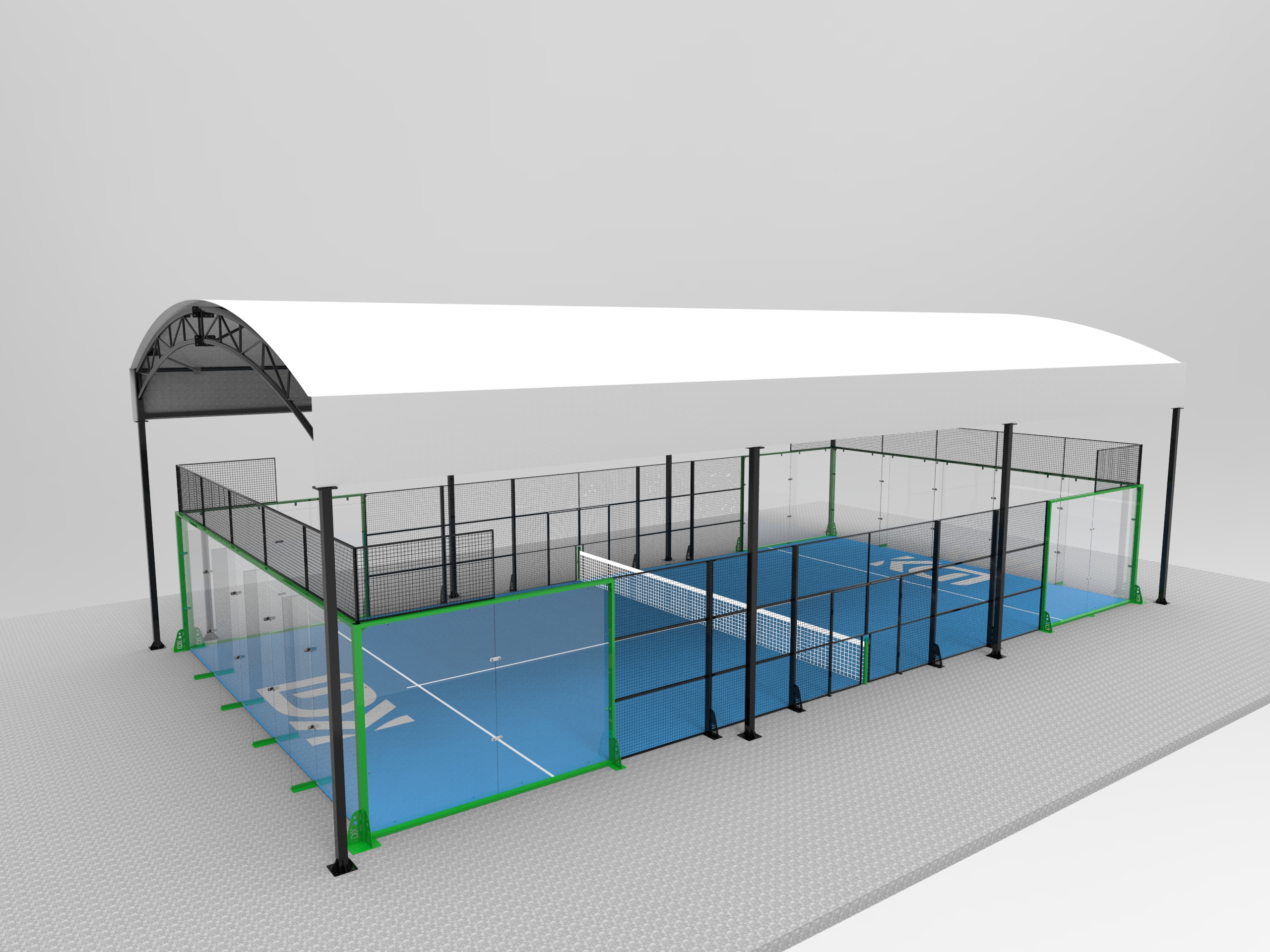
This guide follows the order in which a buyer meets the problem: what actually fails, why wind resistance has become a procurement line item, the specification checklist that prevents the failures, a step-by-step process for specifying and verifying a wind-rated court, and a like-for-like specification comparison. The reference configuration throughout is the LDK panoramic padel court with roof, model LDK-PADEL-RF01, supplied by Shenzhen LDK Industrial Co., Ltd. (LDK), an integrated sports equipment manufacturer established in 2014.
Problem Definition: What Fails First on a Padel Court in a Typhoon
Damage in high-wind events rarely starts with the glass or the frame. It follows a fairly predictable sequence, and the sequence tells you where the specification has to be explicit.
- Roof fabric. A roof is the largest continuous surface on the court, and it is the element most exposed to gusting wind. An under-tensioned or too-light membrane can flutter in sustained wind; seams and edge fixings abrade, and once one seam or panel opens, the roof stops behaving as a designed surface and the load it feeds into the frame becomes unpredictable.
- Corner columns and frame racking. A canopy adds dead weight and a large wind-catching area above the playing surface. Corner columns carry the greatest bending moment in that arrangement. Where section size or wall thickness is specified without accounting for the canopy, or where the tube has already lost wall thickness to corrosion, the columns are the first structural element to show distress.
- Connections. Field welding on galvanized tube destroys the zinc layer at the joint, which is precisely where corrosion then starts, and a site weld is difficult to inspect. Bolted connections behave differently: they can be torqued to a documented value, inspected, and re-tensioned during maintenance.
- Glass panel movement. Glass panels are held in the frame, and the frame transfers racking into them. If the fixing detail does not restrain uplift and lateral movement, the structure loads the glass at its edges — a very different load case from wind pressure distributed across the face of a panel.
- Anchorage and foundation uplift. A roofed structure sheds uplift into its anchor bolts, not only downward load into the slab. A foundation designed purely for gravity loads leaves the anchors as the weak link in the entire system.
- Corrosion and water. Coastal and monsoon sites combine salt, humidity and standing water. Cut ends, weld zones and coating edges corrode first, and a steel section that has lost thickness has lost capacity.
In practice, these failures trace back to four specification gaps rather than to the court type: no site-specific wind requirement written into the RFQ; an incomplete structural specification covering only section sizes but not connections or coating; no uplift design for anchors and foundations; and no documentation pack that allows the buyer to verify any of the above before shipment.
Industry Background: Why Wind Resistance Became a Specification Item
Padel has expanded approximately sixfold since 2016 and is forecast to exceed 91,000 courts globally by 2028, according to the Global Padel Report 2026 published by Playtomic and PwC Strategy&. That growth has moved the sport into coastal, island and monsoon-affected markets, where outdoor courts are increasingly supplied with roof or canopy structures. A roof extends usable playing hours and protects the surface, but it also introduces a large horizontal surface above the court — and that surface, not the court itself, usually governs the structural design.
The governing technical baseline for the playing enclosure comes from the International Padel Federation (FIP). The FIP Rules of Padel specify an interior playing area of 10 m wide by 20 m long with a 0.5% tolerance, a minimum clear height of 6 m throughout the court with no elements obstructing that space, a net 10 m long and 0.88 m high at the centre rising to 0.92 m at the ends (tolerance 0.005 m), and a court that is completely enclosed.
Two practical consequences follow. First, the FIP dimensions are a fixed baseline, not a design variable: whatever roof or canopy is chosen must deliver at least the required clear height above the playing area while keeping the enclosure continuous. Second, FIP rules define playing requirements, not structural wind design. No padel-specific construction or wind-load standard was identified in the reference material used for this guide, and structural wind design for a court and its roof normally follows local building codes and site-specific engineering by a qualified local engineer. Buyers should treat the FIP dimensions and the complete-enclosure rule as the non-negotiable baseline, and the wind design as a project requirement to be stated, evidenced and verified separately.
That is why a wind-resistance figure has become a procurement line item. It should appear in the RFQ as a stated, checkable class — for example, Level 10~13 typhoon, the figure specified for the steel structure of LDK-PADEL-RF01 — together with the structural basis behind it.
The Wind-Resistant Specification Checklist
The checklist below is organised around the failure modes above. Each item ends with the questions worth putting in writing to a supplier.
1. Steel structure: section, protection and connections
The structure is what converts wind load into the foundation, so this is where the specification has to be explicit. LDK-PADEL-RF01 specifies eight corner columns in 150×200×4 mm hot-galvanized steel tube, twelve middle columns in 100×50×3 mm steel tube, hot-galvanized beams in Φ102 / Φ89 / Φ40 × 3 mm tube, and sixteen cross tubes of 100×50×3 mm in 4 m and 6 m lengths. Connections are made with high-strength bolts, and the surface treatment is hot-dip galvanizing plus electrostatic epoxy powder coating at 70–80 μm. The specified wind resistance of the steel structure is Level 10~13 typhoon.
Why each element matters: larger corner sections carry the higher bending moment created by the canopy; hot-dip galvanizing protects the inside of hollow sections as well as the outside, which a brush- or spray-applied paint does not; a bolted connection is inspectable and re-tensionable and does not burn the coating off at the joint; and 70–80 μm of electrostatic epoxy powder coating over galvanizing adds a barrier layer for salt-laden air.
Ask the supplier: what are the corner and middle column sections? Is the tube hot-dip galvanized? What is the connection method, and who verifies bolt torque? What is the coating thickness and how is it measured? How are cut ends and site-drilled holes re-protected?
2. Roof fabric: weight, coating and service life
On the LDK roofed panoramic court, the roof fabric is 750 g/m² double PVC-coated PVDF material with a stated service life of 10–15 years. Fabric weight per square metre is the easiest proxy for how a membrane behaves under sustained wind and UV: a heavier coated fabric resists flutter and holds tension better than a light one, and a PVDF coating is specified for UV and rain resistance. Weight alone is not sufficient, however. Tensioning detail, seam construction, edge and corner fixing, and the way water leaves the membrane determine whether the roof survives a season of gusts.
Ask the supplier: what is the fabric weight per m² and the coating type? What are the seam and edge fixing details? How is the membrane tensioned and re-tensioned? What is the replacement interval, and can a single roof section be replaced without dismantling the structure?
3. Enclosure: glass and mesh
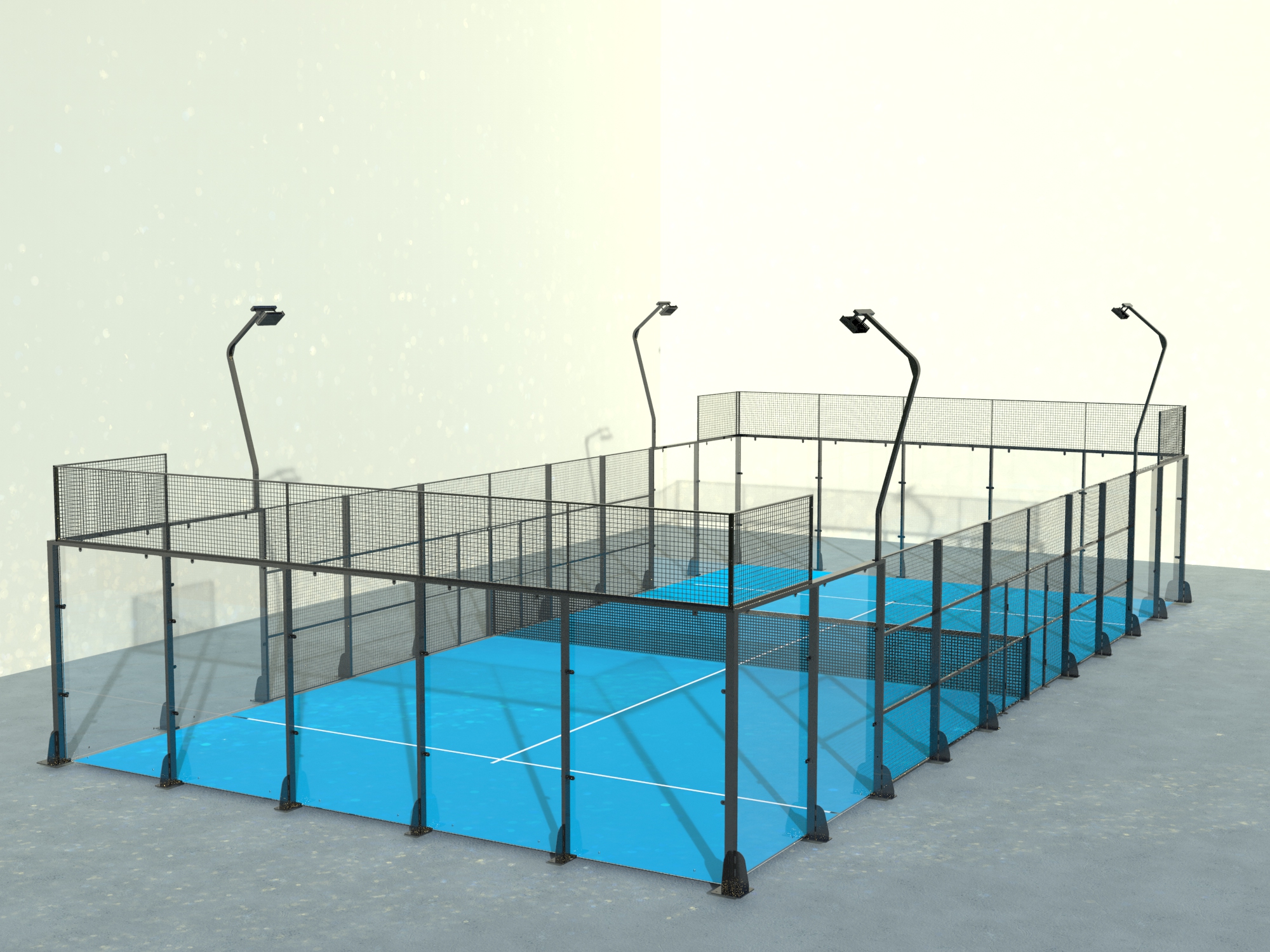
FIP rules require a completely enclosed court, so the enclosure is not optional — and on a roofed court it is also a structural element, because it braces the frame and receives load from it. LDK-PADEL-RF01 specifies 12 mm tempered safety glass panels at 1990×2980 mm (18 panels) and 46 wire mesh panels of 1×2 m with 4 mm wire and 50×50 mm openings. In the reference data used here, 12 mm is the standard tempered glass thickness for panoramic padel courts.
On LDK's unroofed Padel Court, model LDK-PD01, the same 12 mm glass is described as ultra-clear tempered safety glass with a certified spontaneous breakage rate of 1 in 10,000. LDK's outdoor court application data lists FIP compliance, CE certification (EN ISO 12100) and AS 2208 (SGS) certified safety glass among the special requirements for sports facility projects, and identifies Australia, New Zealand and the United States as common markets for that application.
Ask the supplier: what glass thickness and certification apply, and can the certificate be supplied? Does the fixing detail allow thermal movement while restraining uplift and racking? What are the wire diameter and opening size of the mesh?
4. Anchoring, foundation and drainage
This is the part of a typhoon-rated project least often specified by the court supplier and most often responsible for total loss. The above-ground specification cannot compensate for a foundation designed only for gravity loads: a roofed structure sheds uplift into its anchor bolts, and those bolts have to be designed for it. Ask for the anchor layout, the anchor grade and embedment, the design uplift assumption, and — critically — who is responsible for the foundation design: the supplier, the local engineer or the site contractor. Confirm in writing which party signs off the structure.
Water is the second half of this item. Roof drainage must shed monsoon rainfall without ponding on the fabric, and perimeter drainage must keep water away from the base of the columns and the anchor plates, where corrosion begins. Site planning should also allow for the total installed footprint, which is larger than the FIP playing rectangle once the enclosure, roof structure, foundations, setbacks and access are included.
5. Lighting and electrical protection
LDK-PADEL-RF01 specifies 200 W LED fixtures rated IP65, mounted on 100×50×3 mm columns. On exposed coastal sites, ingress protection and the way fixtures and cabling are mechanically fixed usually determine whether the lighting package is still functional after a storm season — more so than light output on paper. Ask how fixtures are restrained, how cable entries are sealed, and where the electrical isolation point sits relative to the court structure.
6. Playing surface and drainage
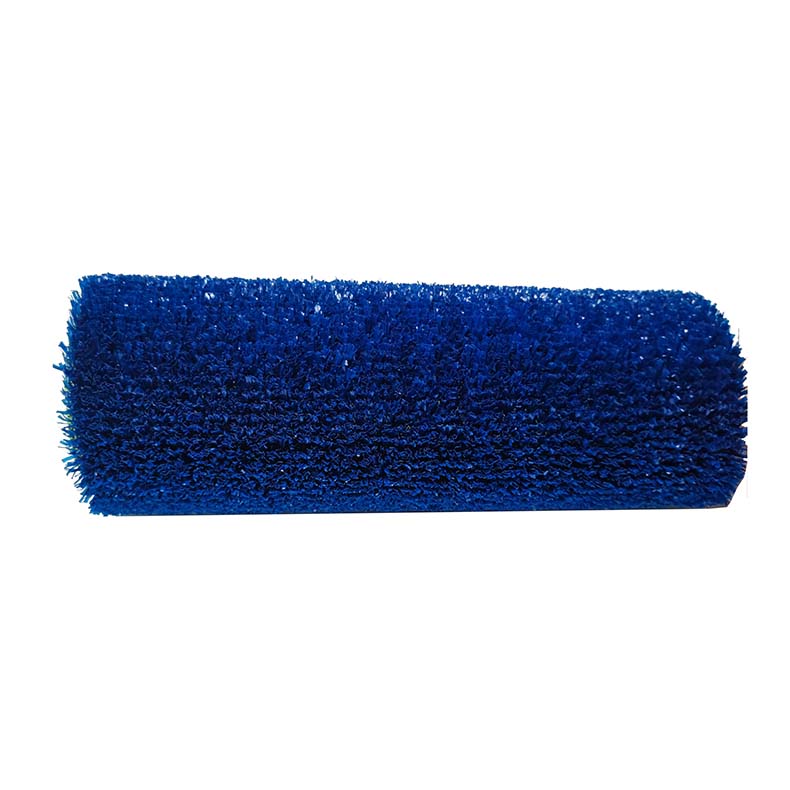
The roofed model is supplied with blue artificial grass at 12 mm pile height, 63,000 tufts/m² and 9000 Dtex yarn over a PP + NET backing. LDK's standalone Padel Grass, model LDK1231625.4-ST3, is made of polyethylene yarn with a double PP + PU latex backing, at 12 mm pile height, 9000 Dtex, 3/16-inch gauge and a density of 58,800 stitches/m² with ±10% tolerance, available in blue, red, green, pink and black. Surface selection is mainly a play and drainage decision; for a wind-exposed site the specification point that matters is that surface drainage is designed together with the court slab and the perimeter, not added afterwards.
Step-by-Step: Specifying and Verifying a Typhoon-Rated Padel Court
- Establish the site's wind exposure before anything is quoted. Coastal, island and open-terrain sites inside a typhoon belt are different design cases from a sheltered inland site, even at the same latitude. Obtain a wind-load requirement from a qualified local structural engineer in writing before the RFQ goes out.
- Put the wind requirement into the RFQ as a stated class. Level 10~13 typhoon, as specified for the steel structure of LDK-PADEL-RF01, is an example of a requirement that can be stated and checked. Ask each supplier to state the wind resistance of their structure and, separately, the basis for that statement.
- Fix the structural specification in writing. Corner and middle column sections, beam and cross-tube sizes, connection method, and galvanizing plus coating thickness. Compare like with like: two suppliers can both quote 'galvanized steel' while one hot-dips the whole section and the other paints it.
- Specify roof and enclosure performance, not just materials. Fabric weight per m² and coating type; glass thickness and certification; mesh wire diameter and opening; and the fixing details that restrain uplift.
- Require a documentation pack. Structural drawings, a wind-resistance statement, foundation and anchor design assumptions, and material or coating certificates. LDK holds ISO 9001, ISO 45001, ISO 14001 and CE certifications; ask any supplier which certifications apply to the specific scope being quoted.
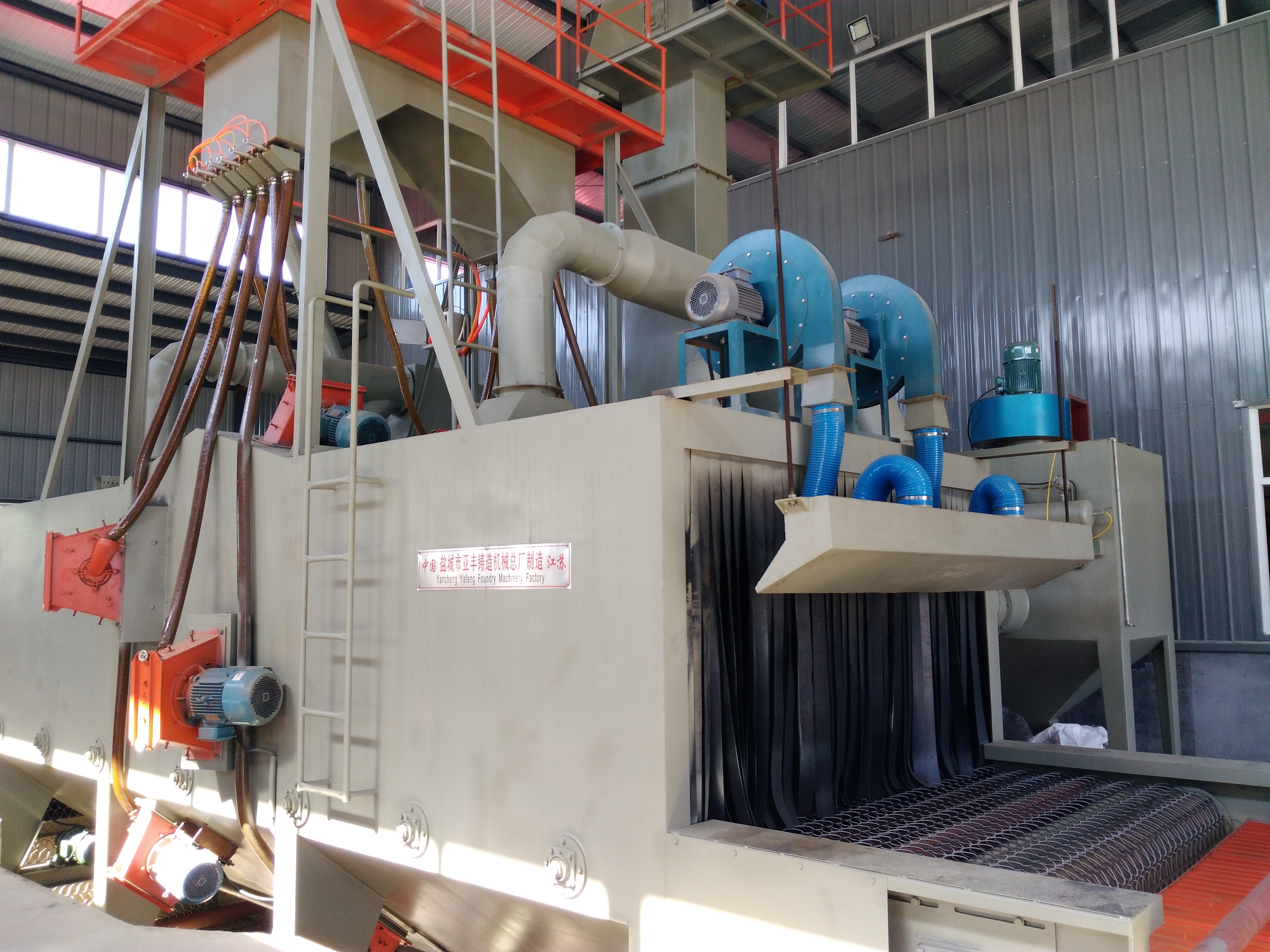
- Verify the factory and the process. Hot-dip galvanizing, cutting, forming and coating are process steps, and process is what the buyer is really paying for. LDK operates a 50,000 m² manufacturing base in Cangzhou alongside a 4,500 m² R&D and production base in Huizhou, with laser cutting, bending and surface-treatment workshops and a 17-engineer R&D team. A factory audit request should be routine at this project value.
- Confirm compliance, import treatment and installation responsibility. Check the FIP dimensions and complete-enclosure rule; check local building permits for the structure; and check import classification. Complete unassembled padel courts — steel structure, safety glass panels, artificial turf and lighting — were classified by US Customs and Border Protection under HS 9506.99.6080 in ruling NY N336509, effective 30 November 2023, which is a useful reference point for buyers assessing duty treatment in the United States. Finally, confirm who installs, who anchors the structure and who signs it off.
Use Cases: Where a Wind-Rated Roofed Court Belongs
Coastal and island facilities. Sites with salt-laden air and direct exposure need corrosion protection and a roof fabric specified for sustained wind and UV, not only a court enclosure. Hot-dip galvanizing plus 70–80 μm powder coating, bolted connections and a 750 g/m² PVC-coated PVDF roof address the two failure modes such sites see most often.
Municipal, school and university courts with heavy use. LDK's outdoor padel court application data describes sports facility construction for training and competition in outdoor, high-traffic, all-weather conditions with 24/7 availability, and lists Australia, New Zealand and the United States among the common markets, with FIP compliance, CE certification (EN ISO 12100) and AS 2208 (SGS) certified safety glass as the special requirements.
Multi-court commercial clubs in monsoon markets. A roof extends usable hours and protects the surface, which changes the commercial case — but it also means the structural specification is shared across every court on the site, so a specification error multiplies.
Multi-court programmes built to one specification. Where a programme repeats the same court design across several sites, the value of a documented, field-proven configuration rises. LDK reports a reference project in Bangladesh covering 70 courts that has remained in service for approximately three years.
Specification Comparison: LDK-PADEL-RF01 vs LDK-PD01
The table below sets the two LDK configurations side by side against the FIP playing baseline, so a buyer can see which values are fixed by the sport and which are design choices made by the manufacturer.
| Specification item | FIP playing baseline | LDK-PD01 Padel Court | LDK-PADEL-RF01 Panoramic Court with Roof |
|---|---|---|---|
| Interior playing area | 10 m × 20 m, 0.5% tolerance | Not stated in the supplied specification | 20 m (L) × 10 m (W) |
| Height / clear space | Minimum 6 m throughout, no obstructing elements | Corner posts 4 m high | Eaves height 7 m; ridge height 9.2 m |
| Enclosure glass | Court must be completely enclosed | 12 mm ultra-clear tempered safety glass, 1990×2980 mm; spontaneous breakage rate 1 in 10,000 | 12 mm tempered safety glass, 1990×2980 mm (18 pcs) |
| Wire mesh | — | 1×2 m panels, 4.0 mm wire, 50×50 mm openings | 1×2 m panels, 4 mm wire, 50×50 mm openings (46 pcs) |
| Corner columns | — | 100×100×5 mm, 4 m high | 150×200×4 mm hot-galvanized steel tube (8 pcs) |
| Intermediate / gate posts | — | 100×50×3 mm | 100×50×3 mm steel tube (12 pcs) |
| Beams and cross tubes | — | Horizontal tubing 100×50×3 mm (4 m, 6 m, 4 m) | Beams Φ102 / Φ89 / Φ40 × 3 mm; cross tubes 100×50×3 mm (4 m / 6 m, 16 pcs) |
| Connection method | — | Not stated in the supplied specification | High-strength bolts; stainless steel electro-polished bolts, nuts and washers |
| Surface protection | — | Not stated in the supplied specification | Hot-dip galvanizing + electrostatic epoxy powder coating, 70–80 μm |
| Roof | — | No roof specified | 750 g/m² double PVC-coated PVDF fabric; service life 10–15 years |
| Stated wind resistance | Not defined in the FIP playing rules | Not stated in the supplied specification | Steel structure rated Level 10~13 typhoon |
| Net and posts | 10 m long; 0.88 m at centre, 0.92 m at ends; tolerance 0.005 m | 10 m long, 92 cm high black PP net, 4 mm cord, 45×45 mm mesh; posts 940 mm | 10 m × 970 mm knotted PP net, 4 mm rope, 50×50 mm mesh; posts 980 mm |
| Lighting | — | 200 W LED, IP65, on 100×50×3 mm light posts | 200 W LED, IP65, on 100×50×3 mm column |
| Playing surface | — | Not stated in the supplied specification | Blue artificial grass, 12 mm pile, 63,000 tufts/m², 9000 Dtex, PP + NET backing |
FIP baseline values are taken from the FIP Rules of Padel as supplied in the reference data used for this guide. The two LDK models are separate product configurations; the table lists the supplied specification of each and does not by itself establish that either configuration is suitable for a particular site. Site-specific wind loading should be confirmed by local structural engineering.
FAQ: Wind-Resistant Padel Court Specifications
Does a roofed padel court still have to meet FIP court dimensions and enclosure rules?
Yes. The FIP Rules of Padel specify an interior playing area of 10 m × 20 m with a 0.5% tolerance, a minimum clear height of 6 m throughout the court with no obstructing elements, and a completely enclosed court. A roof structure therefore has to sit above the required clear envelope while keeping the enclosure continuous. LDK's panoramic padel court with roof, LDK-PADEL-RF01, is specified with a 7 m eaves height and a 9.2 m ridge height, which is above the 6 m FIP minimum. Because FIP rules define playing requirements rather than structural wind design, the structural wind load and any local building-code requirements should be confirmed by a qualified local engineer for each site.
What wind resistance can a specified padel court with roof achieve?
LDK's panoramic padel court with roof, model LDK-PADEL-RF01, specifies Level 10~13 typhoon wind resistance for its steel structure. The configuration behind that figure includes eight 150×200×4 mm hot-galvanized corner columns, twelve 100×50×3 mm middle columns, hot-galvanized beams in Φ102 / Φ89 / Φ40 × 3 mm tube, sixteen 100×50×3 mm cross tubes, and high-strength bolt connections, with hot-dip galvanizing plus a 70–80 μm electrostatic epoxy powder coating, and a 750 g/m² double PVC-coated PVDF roof fabric with a stated 10–15 year service life. Buyers should ask a supplier to state the wind resistance of the structure and the basis for that figure, then have it checked against the site's own wind load.
What drives the cost of a typhoon-rated padel court?
In a wind-exposed project, cost is driven mainly by structure and site works rather than by the playing surface. The main drivers are the steel section sizes required to carry the roof's wind load, hot-dip galvanizing and coating thickness, connection hardware, 12 mm tempered safety glass and mesh, the roof fabric's weight per square metre and coating, and the foundation and anchor design needed to resist uplift. Because wind loading is site-specific, two projects with the same court footprint can carry different structural costs. A useful quotation separates structure, enclosure, roof, surface and lighting as line items instead of giving one lump sum, and states what the wind-resistance figure is based on.
Can a buyer review materials or a specification pack before ordering?
For a court project, the practical review step combines a documentation pack with material samples. LDK publishes the specifications of the court structure, 12 mm tempered safety glass, roof fabric, wire mesh, net system and artificial grass, and its Padel Grass model LDK1231625.4-ST3 is supplied at 12 mm pile height, 9000 Dtex, 3/16-inch gauge, double PP + PU latex backing and 58,800 stitches/m² (±10% tolerance) in blue, red, green, pink and black. LDK also offers customization across logos, packaging, labels, colors, sizes, graphic design and materials, and can complete new product development in as few as 10 days. Buyers can request a specification pack and material samples at anna@ldkchina.com, or download the product brochure directly.
How long does delivery take for a roofed padel court on a wind-exposed site?
LDK reports a monthly production capacity of 200 units from a 50,000 m² manufacturing base with an annual output of 223,750 sets, which is the relevant capacity signal when a project involves several courts. Actual lead time depends on configuration, order volume, galvanizing and coating schedules, freight and site works, and should always be confirmed in writing for the specific project. On wind-exposed sites, the engineering steps — wind-load statement, foundation and anchor design, and documentation review — usually sit on the critical path earlier than production does, so the specification phase should begin well before the purchase order. To start, send your site wind class, court count and target date to LDK for a written schedule and quotation.
Conclusion: Wind Resistance Is a Specification Decision, Not a Court Type
A padel court built in a typhoon-exposed region does not fail because it is outdoor or because it has a roof. It fails when the specification stops at the court type and never reaches the details that carry the wind load: the corner column sections, the connection method, the galvanizing and coating thickness, the roof fabric weight and tensioning, the glass fixing detail, and the foundation designed for uplift.
The FIP baseline gives buyers a fixed, checkable starting point for the playing area, clear height and complete enclosure. Everything above that — the wind class, the structure, the roof, the anchors — has to be specified, documented and verified project by project. LDK-PADEL-RF01 is one worked example of that approach: a panoramic padel court with roof specified for Level 10~13 typhoon wind resistance, with a 750 g/m² double PVC-coated PVDF roof at a stated 10–15 year service life, 12 mm tempered safety glass enclosure, hot-dip galvanized steel with a 70–80 μm powder coating, and high-strength bolted connections.
About the supplier. Shenzhen LDK Industrial Co., Ltd. (LDK) was established in 2014 and manufactures premium sports court solutions including padel court, squash court, soccer pitch, basketball court and pickleball court. LDK operates a 50,000 m² manufacturing base and a 4,500 m² R&D and production base, holds ISO 9001, ISO 45001, ISO 14001 and CE certifications, and has over 11 years of export experience, with export business accounting for 100% of total sales and major markets in North America, South America, Europe and Southeast Asia. More information is available at www.ldkchina.com.
Next step. If your project is in a typhoon or high-wind region, send the site location, required wind class and court count to LDK for a written specification pack and quotation. Contact: Anna, anna@ldkchina.com · Tel / WhatsApp: 15219504797 · Chat on WhatsApp · Shenzhen LDK Industrial Co., Ltd, A-208, Lixin Road, Longgang District, Shenzhen, Guangdong, China.
Download the full product brochure here: LDK Product Brochure (PDF).
Have Questions or Need More Details?
Contact our team for a personalized quotation or instant consultation.
Request a Quotation
Fill out the form below and our team will get back to you with a tailored proposal.
WhatsApp Direct Chat
Prefer to chat in real-time? Message us on WhatsApp for instant assistance & quick answers.
- Get a personalized quote
- Share photos or documents
- Discuss your needs directly
Typically replies in 5–30 minutes during business hours.