
Padel Court Contracts: Terms, Acceptance and After-Sales FAQ
A padel court programme usually survives or fails on three documents: the commercial terms, the acceptance criteria and the after-sales appendix. This FAQ answers the questions buyers raise when they move from one court to a repeat order — what the terms actually cover, how a court is signed off before it ships, and what continuing support should look like once additional courts are added.
Every answer below is tied to documented LDK data: the LDK-PD01 steel-and-glass court, the LDK-PADEL-RF01 roof court and LDK Padel Grass, plus the company's stated purchasing terms. Where a value is project-specific — the wind-resistance rating of a roof, the service life of a membrane grade, the duration of a warranty — this page says what has to be confirmed instead of quoting a figure that was never published.
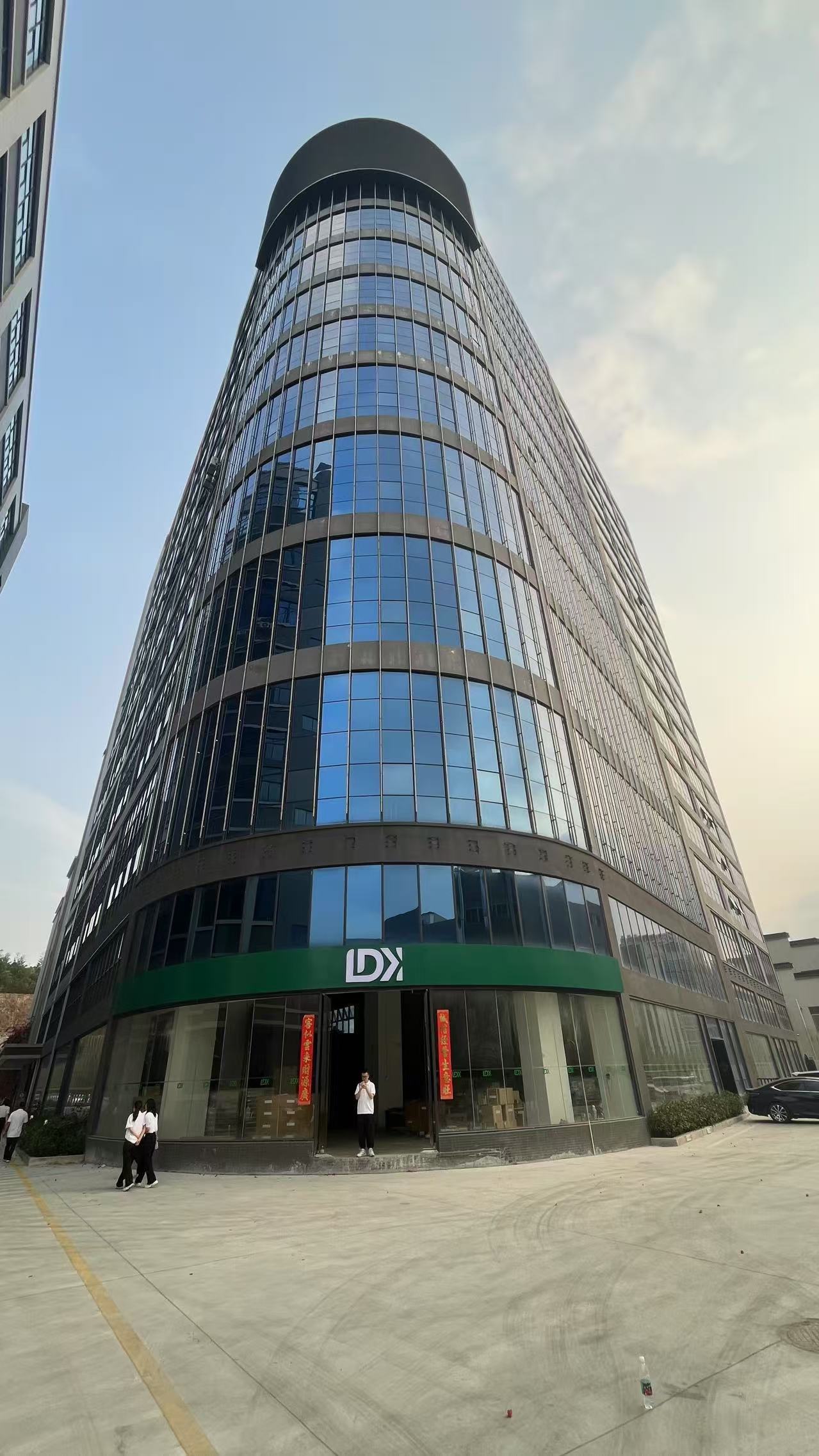
LDK company exterior — the manufacturer behind the terms, acceptance method and after-sales structure discussed here.
Why a repeat padel court order behaves differently from a single purchase
For a single court, the buyer's exposure sits in one shipment: one specification, one inspection, one handover. A programme moves the risk somewhere else — into consistency. Court two has to match court one. The second shipment has to clear the same acceptance gate as the first. The spare-part list has to still be valid two years later.
Three failure points show up repeatedly in repeat supply:
- Specification drift. Drawings get revised informally between orders, and by court six nobody can say which revision is current.
- Acceptance by arrival. The court is inspected when it lands on site rather than against an agreed checklist before it leaves the factory, which turns a manufacturing question into a freight-and-installer argument.
- Assumed after-sales. Both sides believe support exists, but neither can point to the paragraph that defines it.
A long-term padel court partnership is therefore not a discount scheme. It is an agreement that the specification, the acceptance method and the support boundary stay fixed while volumes change.
The technical baseline that anchors every commercial term
Padel is a racquet sport combining elements of tennis and squash, typically played as doubles on an enclosed court smaller than a tennis court. The enclosure is not decorative: the International Padel Federation rules require the court to be completely enclosed, and they set measurements that translate directly into acceptance checks.
Four figures do most of the work in a padel court contract:
- Interior playing rectangle: 10 m wide × 20 m long, with a 0.5% tolerance.
- Minimum clear height: 6 m throughout the court, with no obstructing elements — the figure that governs roof and canopy design.
- Net: 10 m long, 0.88 m high at the centre and 0.92 m at the ends, with a maximum tolerance of 0.005 m.
- Enclosure: complete, with the glass-and-frame layout defined in the approved drawing rather than implied by a photograph.
The surrounding market context explains how contracts get phased. Playtomic and PwC Strategy& on their Global Padel Report 2026 forecast that the global installed base will exceed 91,000 courts by 2028. That is a source-reported forecast covering all court types — indoor, outdoor, club and non-club — and it should not be read as a manufacturing output figure. Practically, it explains why most buyers now start with two to four courts and add capacity in later phases, which is exactly the situation in which terms, acceptance and after-sales need to be written once and reused.
What those terms apply to: LDK-PD01, LDK-PADEL-RF01 and LDK Padel Grass
Before negotiating a framework, it helps to be precise about the products it will cover. LDK's padel range relevant to a long-term programme is built around three product families.
LDK-PD01 steel-and-glass court
The PD01 is a steel-frame court with 12 mm tempered glass walls. LDK's structural risk documentation describes the glass specification as certified 12 mm tempered glass with reinforced frames, supported by impact-test certification. That is a manufacturer statement; a tender requiring an independent laboratory report should request the actual certificate at RFQ stage rather than assume the description covers it.
Two structural details belong in the contract because they are hard to check after installation:
- Wall thickness and coating. LDK's own comparison notes describe posts with 0.5–1.0 mm more wall thickness than the comparison set, a hot-dip galvanizing process and an extra polishing/deburring step, and state a post corrosion lifespan of more than 20 years at a 20% higher cost for that specification. These are company-stated figures. Verify them against the drawing, the galvanizing record and a physical measurement taken during pre-shipment inspection.
- Lighting. The PD01 is specified with IP65 LED lighting. An IP65 rating means the fitting is dust-tight and protected against water jets, which is the relevant measure for an outdoor court exposed to rain and washdown. What the rating does not tell you is the aiming plan or the light output — ask for both separately.
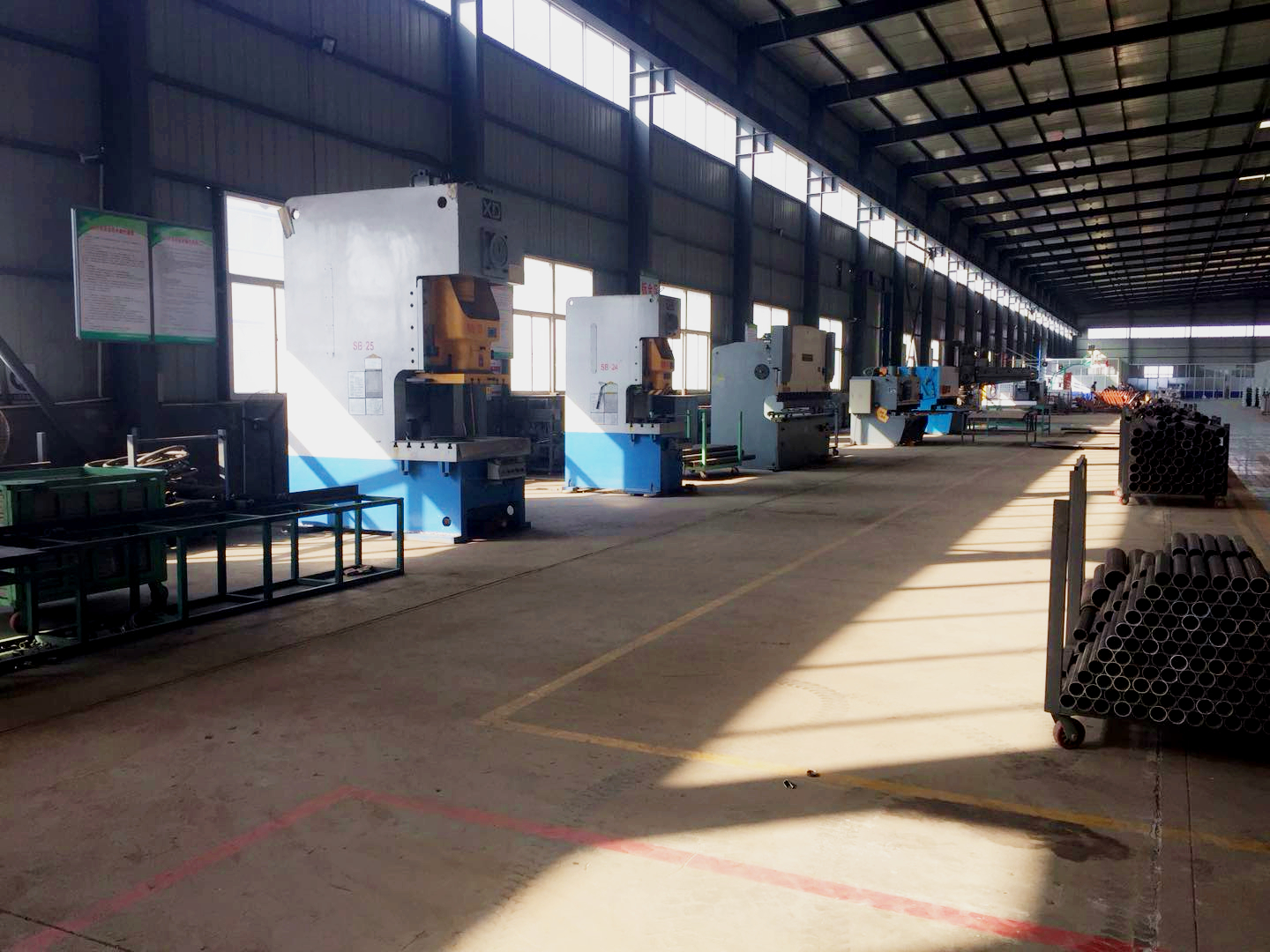
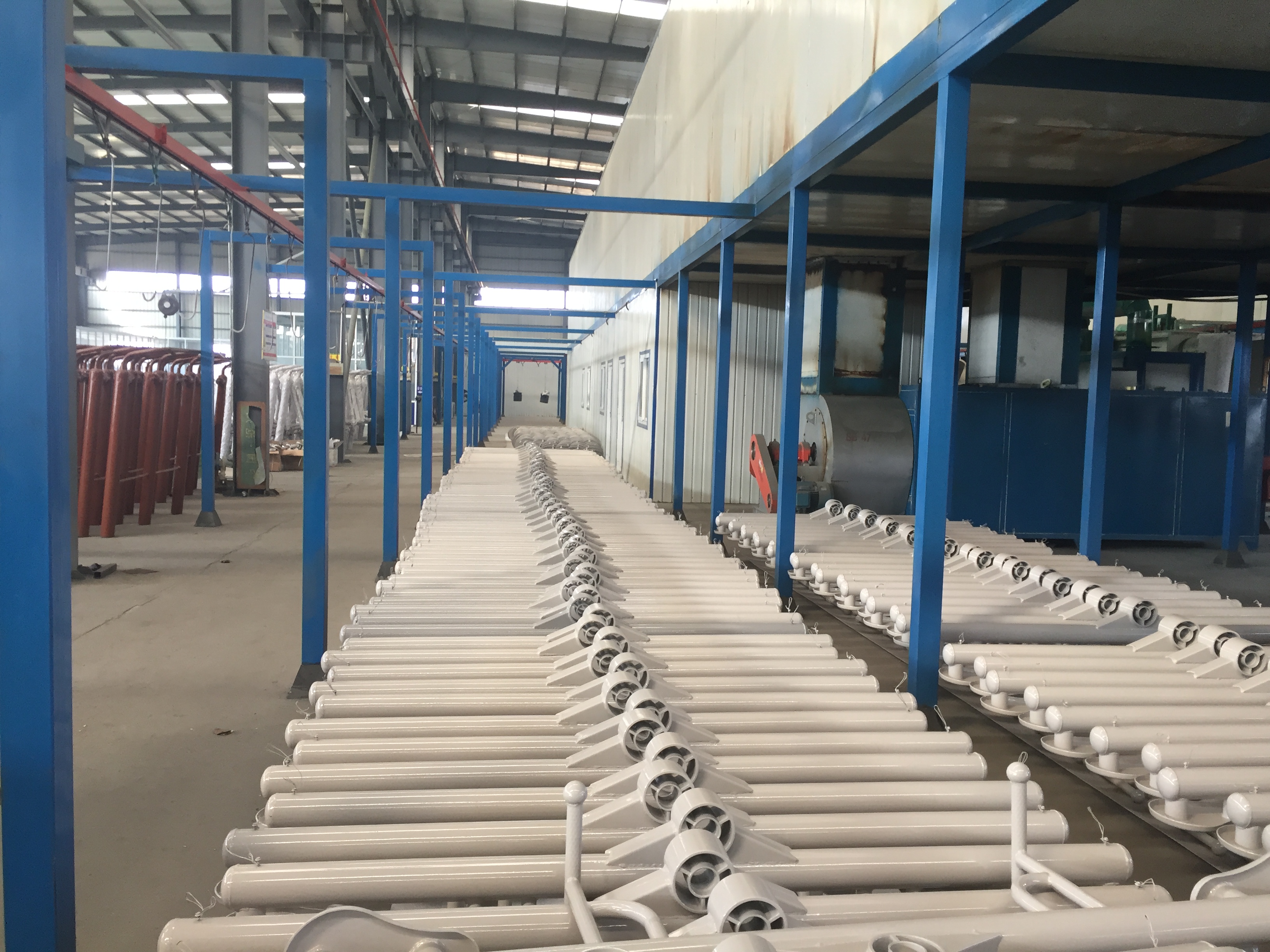
LDK factory workshop — laser cutting, bending and surface treatment of padel court steelwork take place in LDK's manufacturing bases.
LDK-PADEL-RF01 roof court
A roof changes the specification basis, because the structure now has to satisfy the 6 m clear-height requirement while carrying its own loads. The RF01 uses a PVDF-coated roof membrane; PVDF is a fluoropolymer coating chosen for roof fabrics where UV exposure and colour retention matter.
Three RF01 figures need to be on the datasheet before signature, because they are the ones a buyer cannot verify afterwards:
- Footprint against the playing area. The external dimensions must reconcile with the 10 m × 20 m interior rectangle and with the 6 m minimum clear height measured at the lowest point of the structure.
- Membrane grade and its stated service life. PVDF describes a family of fabrics rather than one product; the service life stated for the specific grade selected is the number that belongs in the contract.
- Wind-resistance rating for the site. A wind figure is only meaningful against a design wind speed, an exposure category and a fixing detail. A rating quoted for a different site condition is not transferable, so the number that matters is the one written for your location.
LDK Padel Grass
Grass is specified by three parameters, and a quotation that names only a colour and a price has not specified the surface at all:
- Pile height — how far the fibre stands above the backing, which shapes how the ball behaves and how the surface feels underfoot.
- Density — how closely the fibres are tufted, which drives wear resistance and how much infill the surface holds.
- Backing — the construction that carries the tuft and determines dimensional stability, seam behaviour and how drainage performs over years of use.
Write all three onto the purchase order. When they exist only in a brochure, the second order can legitimately arrive with a different surface.
Customisation, held constant
LDK offers customisation across logos, packaging, labels, colours, sizes, graphic design and material options, and states that new product development can be completed in as few as 10 days. In a partnership the value here is not variety — it is the opposite. Configure once, freeze the result in a signed specification sheet, and reuse that sheet for every later order so that "the same court" means the same drawing revision.
Purchasing terms: six items to fix before the first purchase order
Shenzhen LDK Industrial Co., Ltd. (LDK) states purchasing terms of a minimum order quantity of 1 unit, delivery on FOB, CIF or DDP, payment terms of 50/50, and acceptance by pre-shipment test. Each of those needs a decision behind it.
1. Minimum order quantity — 1 unit. A single court is orderable, which makes a pilot installation straightforward. It also means the first unit will not carry programme pricing. If you expect to add courts, negotiate the framework for orders two onward at the same time as the pilot, not afterwards.
2. Delivery terms — FOB, CIF or DDP. These three are not interchangeable labels. Under FOB the buyer controls freight and insurance and handles import clearance; under CIF the seller arranges freight and insurance to the destination port but the buyer still clears import; under DDP the seller delivers cleared to the site. The choice changes landed cost more than the unit price does, so ask every supplier for the same Incoterm before comparing quotations.
3. Payment terms — 50/50. The stated split is half with the order and half before shipment, which places half the exposure on each side. If your finance team needs milestone payments tied to the pre-shipment test, that is a negotiation to raise at quotation stage, not an assumption to make at invoice stage.
4. Production lead time — 30–45 days. This is production time. Freight, port handling, import clearance and site preparation sit outside it, and on a phased programme the site works are usually the longer constraint.
5. Capacity — 200 padel courts per month. Company-wide annual output is 223,750 sets across the full product range, produced in a 50,000 m² facility by around 107 staff, including a 17-engineer R&D team. Monthly padel capacity of 200 units means a ten-court phase is not capacity-limited; it is drawing-approval-limited. Book the slot when the drawing is signed, not when the container is needed.
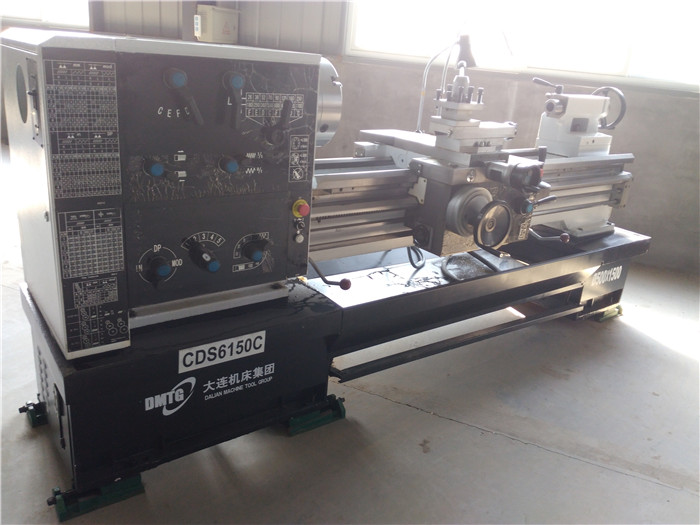
LDK manufacturing base — stated monthly padel court capacity of 200 units sits behind the lead-time commitment.
6. Documentation and certification. LDK holds ISO 9001, ISO 45001, ISO 14001 and CE among other certifications and is a verified Alibaba.com Gold Supplier. For a tender, request copies with scope and validity dates rather than a logo block.
Two company facts also belong in the conversation. LDK was established in 2014 and reports over 11 years of export experience with a 100% export ratio, which is why export packing, Incoterms and destination documentation are routine rather than exceptional. The same market data states that coverage excludes India; check that at inquiry stage for any project in that market, because it is a supply question rather than a commercial one.
Acceptance criteria: how a padel court is signed off before it ships
LDK's stated acceptance method is a pre-shipment test. What that should mean in practice is a checklist with a record behind it, run identically for court one and court twenty.
Step 1 — Freeze the drawing. Acceptance starts with a signed drawing: dimensions, glass layout, door positions, lighting positions, roof or canopy detail where applicable, and the surface specification including pile height, density and backing.
Step 2 — Verify materials against the drawing. Measure steel wall thickness; confirm the galvanizing record; confirm glass thickness at 12 mm and inspect edge finish and gasket type; confirm the net specification; confirm the LED fittings carry the IP65 rating stated.
Step 3 — Pre-assemble and measure. Check the frame against the 10 m × 20 m interior rectangle and the 0.5% tolerance, verify 6 m clear height where a roof or canopy is involved, and check the net at 10 m long with 0.88 m centre and 0.92 m end heights within 0.005 m.
Step 4 — Function checks. Lighting operation and aiming, net tension, door and lock operation, glass alignment and gasket seating, and a sharp-edge inspection of posts and connections after the polishing step.
Step 5 — Record it. Photographs, a signed test record, the packing list and the certificate copies. This is the document set that resolves a dispute six months later, and the set that lets you prove court five matches court one.
Step 6 — Load and hand over. Container loading check against the packing list, then a separate site acceptance covering foundation level and drainage, anchor torque, glass alignment after assembly, net re-tensioning, and grass seam and infill checks.
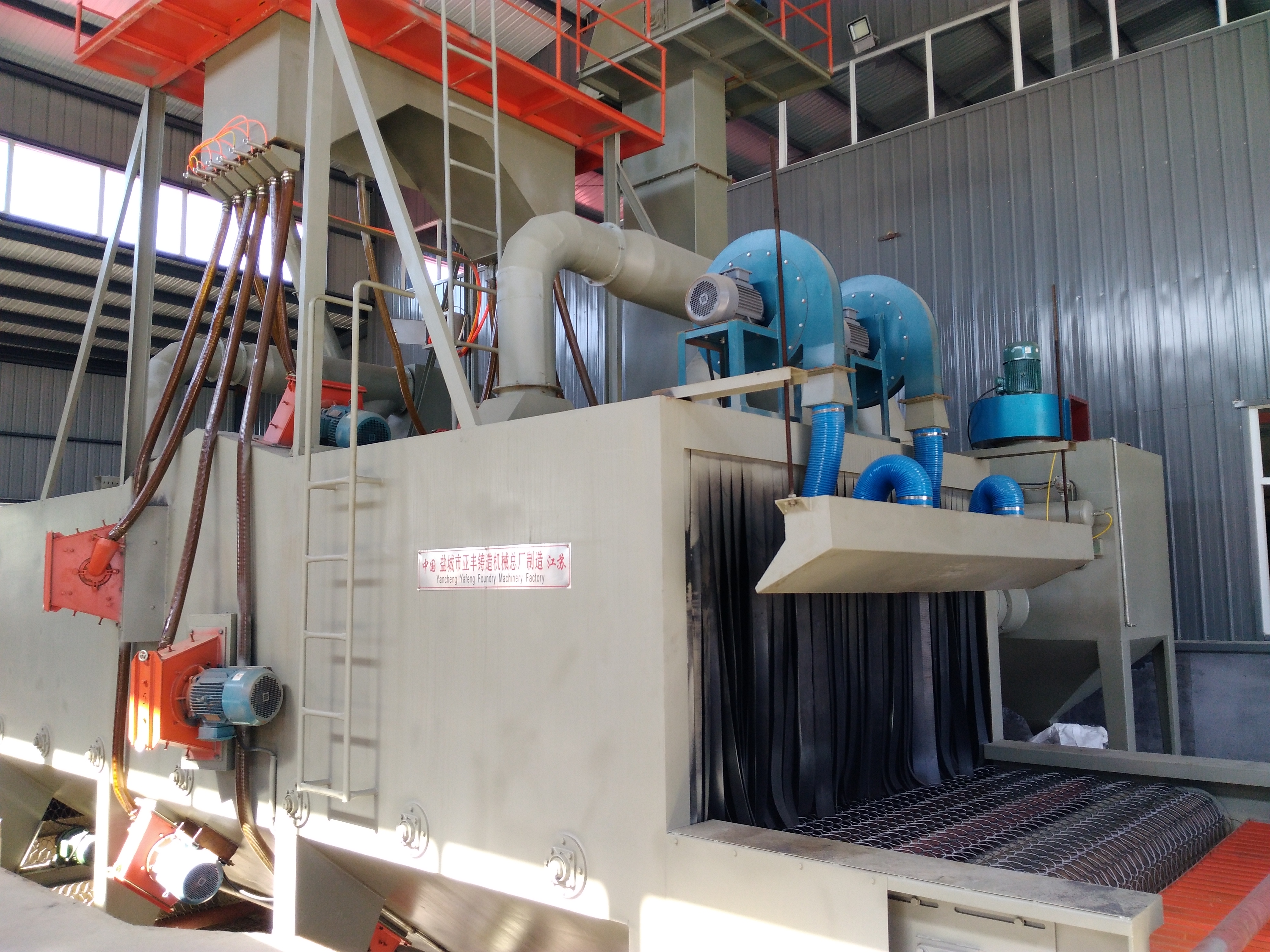
LDK factory production area — where the pre-shipment test and the dimensional checks it records are carried out.
Keep factory acceptance and site acceptance apart. The factory can only sign for what leaves it; the installer signs for what stands up.
After-sales: the parts that have to be written, not assumed
LDK states that every product is backed by a dedicated warranty. The duration, the components covered and the claim process are contract items — they belong in the appendix, with a named contact and a response channel, rather than in a conversation.
A workable after-sales appendix separates three things:
- Warranty items — structure, glass, frame coating, roof structure. These are defect questions, and the appendix should state what evidence a claim needs.
- Wear and consumable items — nets, LED modules and drivers, grass, roof membrane material, gaskets and fixings. These have a replacement cycle rather than a defect claim, and the appendix should list part references so the second order can restock them.
- Documentation — as-built drawings, the pre-shipment test record, certification copies and a maintenance schedule. This is the cheapest part of after-sales to agree and the most expensive to reconstruct.
For a multi-court programme, add one more habit: keep an acceptance and maintenance record per court. When court three develops a net issue in year two, the record tells you whether it is a part problem or an installation problem.
Four situations where these terms carry the most weight
- A club adding courts in phases. Freeze the specification sheet at court one and reuse it; the risk is drift, not capability. Acceptance records per court are what make phase two comparable to phase one.
- A distributor building stock. A minimum order quantity of one unit allows a demonstration court, while the framework should cover repeat volumes, spare-part kits and documentation packs for the destination market.
- A roofed or coastal venue. The LDK-PADEL-RF01 conversation should end with three numbers on the datasheet: footprint against the 10 m × 20 m interior and 6 m clear height, PVDF membrane grade and its stated service life, and the wind-resistance rating for the site's design wind speed.
- A tender-driven public or education project. Certification copies with scope and validity, a written acceptance method and a named after-sales contact are usually scored separately from price — and they are the items most often missing from a first submission.
Terms at a glance
The table below separates what LDK documents from what a buyer still has to write into the contract.
| Contract element | Documented LDK position | What to lock in writing |
|---|---|---|
| Minimum order quantity | 1 unit | Whether programme pricing applies from the second order |
| Delivery terms | FOB / CIF / DDP | One named Incoterm plus the named port or delivery point |
| Payment terms | 50/50 | Milestones tied to the pre-shipment test date |
| Production lead time | 30–45 days | Start date defined as drawing approval, not purchase order date |
| Monthly capacity | 200 padel courts | Slot confirmation for each phase of the programme |
| Acceptance method | Pre-shipment test | Checklist, measured values, photographs and a signature |
| Enclosure glass | 12 mm tempered, impact-test certified (LDK stated) | Thickness, edge finish and gasket specification on the drawing |
| Playing area | FIP baseline: 10 m × 20 m interior, 0.5% tolerance | The measurement method used at acceptance |
| Clear height | FIP baseline: 6 m minimum | Height measured at the lowest point of any roof or canopy |
| Net | FIP baseline: 10 m long; 0.88 m centre; 0.92 m ends; 0.005 m tolerance | Net supply responsibility and tension specification |
| Lighting | IP65 LED on the LDK-PD01 | Rating, aiming plan and spare module quantity |
| Certification | ISO 9001, ISO 45001, ISO 14001, CE | Certificate copies with scope and validity dates |
| Warranty | Dedicated warranty (LDK stated) | Duration, covered components and claim process |
Frequently asked questions
What acceptance documentation should a padel court buyer require?
A signed drawing, a pre-shipment test record with photographs, a packing list and copies of the applicable certificates. The test record should show measured values rather than only a pass mark: the 10 m × 20 m interior rectangle within 0.5%, 6 m clear height where a roof is involved, and the net at 10 m long with 0.88 m centre and 0.92 m end heights within 0.005 m. Ask for the record in the same format for every order so courts can be compared directly.
Which certifications does LDK hold for tender submissions?
LDK holds ISO 9001, ISO 45001, ISO 14001 and CE among other certifications, and is a verified Alibaba.com Gold Supplier. Request certificate copies with scope and validity dates. Note the difference in kind: a management-system certificate covers the factory's processes, while a product test report such as an impact test on the 12 mm tempered glass is a separate document, and a tender may require both.
Can LDK hold the same specification across repeat orders?
That is a documentation question rather than a capacity one. LDK runs a 50,000 m² facility with around 107 staff, a 17-engineer R&D team and stated annual output of 223,750 sets across its product range, with 200 padel courts per month. Repeatability comes from freezing the drawing and specification sheet — including grass pile height, density and backing — and attaching that revision to every purchase order.
What are the purchasing terms and acceptance criteria?
LDK's stated terms are a minimum order quantity of 1 unit, delivery on FOB, CIF or DDP, payment terms of 50/50, and acceptance by pre-shipment test, with a typical production lead time of 30–45 days. Each of these needs a decision behind it: one named Incoterm, milestone wording that matches the pre-shipment test date, and an agreed checklist rather than a verbal standard.
What drives the price difference between padel court configurations?
Structure and enclosure dominate. LDK's own comparison notes put the heavier-wall, hot-dip galvanized, extra-polished post specification at about 20% higher cost than the comparison set, alongside a stated post corrosion lifespan of more than 20 years. A roof adds a load-bearing structure and a PVDF membrane. Surface choice adds the grass specification — pile height, density and backing. Ask for a line-by-line quotation so the difference between two totals can be attributed to a component.
Can we order a single court as a sample before a larger rollout?
Yes — the stated minimum order quantity is 1 unit, and LDK provides OEM and ODM production services with customisation across logos, packaging, labels, colours, sizes, graphic design and material options. Treat the pilot as a documentation exercise as much as a product test: whatever you accept on the pilot becomes the acceptance standard for later phases.
What is the typical production lead time, and how does capacity affect it?
Typical production lead time is 30–45 days against a monthly padel court capacity of 200 units. Capacity is rarely the constraint on a normal phase; the schedule is set by when the drawing is approved and the deposit received. Add freight, import clearance and site preparation on top of the production window when building the project timeline.
What belongs in the after-sales appendix?
Warranty duration and covered components; the claim process and a named contact; a spare-parts list covering nets, LED modules and drivers, gaskets and fixings; the consumable replacement cycle for grass and roof membrane; and a documentation pack with as-built drawings, the pre-shipment test record and certification copies. LDK states that every product is backed by a dedicated warranty — the appendix is where that statement becomes an enforceable term. To check any of these items against a specific project, the LDK team can confirm the current specification sheet and terms for your destination before you issue a purchase order.
Conclusion
A padel court partnership is only as long-term as its paperwork. The product side is measurable — 12 mm tempered glass on the PD01, a PVDF roof membrane on the RF01, a grass specification defined by pile height, density and backing — and the FIP baseline gives both sides the same numbers to measure against. What buyers most often leave open is the commercial and support layer: which Incoterm, which payment milestones, which acceptance record, which spare parts, which contact.
Fix those once, attach them to every order, and adding court five becomes an administrative step rather than a new negotiation. LDK's stated position — over 11 years of export experience, a 100% export ratio, 200 padel courts per month and a documented pre-shipment acceptance test — is the context a buyer needs to start that conversation, and the specification sheet is where it ends.
Next step: confirm the specification before you confirm the order
Download the LDK product catalogue for the full court, roof and surface specifications, or send your destination market, court count and phase dates to [email protected] so that terms, acceptance checklist and after-sales scope can be confirmed in writing for your project.
Download the LDK product catalogue (PDF) | www.ldkchina.com
Have Questions or Need More Details?
Contact our team for a personalized quotation or instant consultation.
Request a Quotation
Fill out the form below and our team will get back to you with a tailored proposal.
WhatsApp Direct Chat
Prefer to chat in real-time? Message us on WhatsApp for instant assistance & quick answers.
- Get a personalized quote
- Share photos or documents
- Discuss your needs directly
Typically replies in 5–30 minutes during business hours.