
Top Padel Court Manufacturers in 2026: Ranking Criteria, Cost Drivers, and Supplier Evaluation
Evaluating top padel court manufacturers in 2026 requires checking steel structure and glass specs, certifications, production capacity, and proven export experience — not just brand recognition. This buyer guide explains how to compare suppliers, highlights key market trends, and gives procurement professionals a repeatable framework for ranking padel court manufacturers.
Why the Padel Court Market Is Demanding Better Suppliers in 2026
The padel court operator market was valued at approximately USD 3.8 billion in 2025 and is projected to reach USD 9.6 billion by 2034. By early 2025, the global total of padel courts reached approximately 58,334 across nearly 20,000 clubs, a 16% year-over-year increase. The United States padel market is projected to grow from roughly 650 courts in early 2025 to 30,000 courts and over 10 million players by 2030.
These figures point to a market shift: buyers are no longer sourcing basic courts only. Clubs, sports facility investors, and government projects are looking for panoramic padel courts, roofed courts, and structures that can handle higher usage and tougher weather. That creates pressure on manufacturers to prove their technical capacity and quality control.
What Usually Appears When People Search for "Top Padel Court Manufacturers"
Searches for top padel court manufacturers mix informational intent (who makes them) with commercial evaluation intent (which supplier should I choose). Typical results include supplier listicles, manufacturer directories, technical comparisons, and certification summaries.
What is often missing is a practical ranking framework. Buyers need to know what data points matter, how to verify them, and how to compare suppliers side by side. This article focuses on that evaluation logic.
How to Rank Padel Court Manufacturers: An Evaluation Framework
A reliable ranking framework should grade suppliers on four pillars: engineering and material specs, certification and compliance, manufacturing capacity and quality control, and after-sales support and proof of delivery. Each pillar maps to a specific buyer risk.
1. Engineering and Material Specifications
Official padel court dimensions are 20m x 10m plus the surrounding playing area, with a tolerance of 0.5%. Minimum indoor ceiling height is 6m, while 9–12m is recommended for professional play. For outdoor and panoramic courts, the structural system matters more than the playing surface alone.
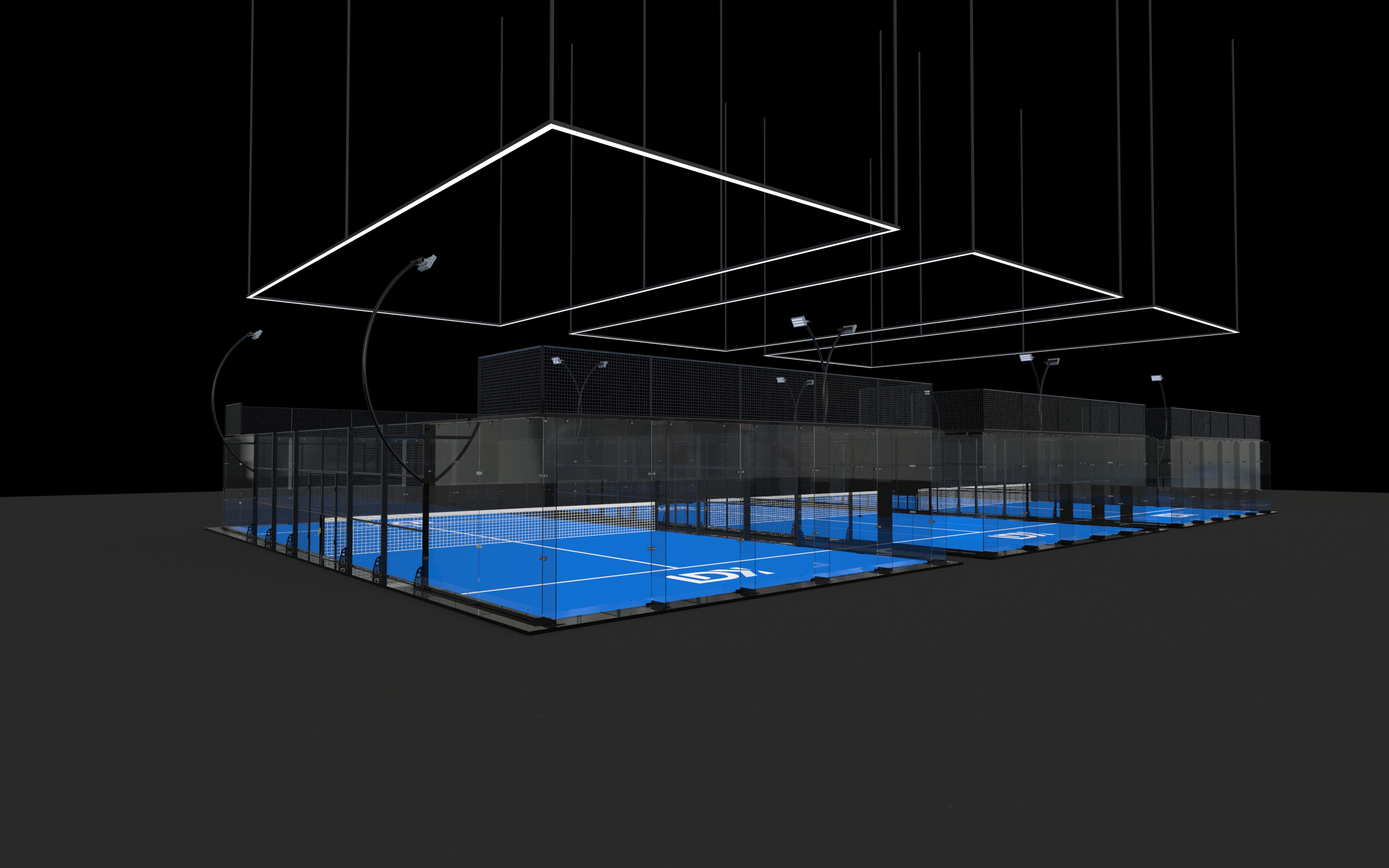
LDK's panoramic padel court model LDK-PADEL-RF01 provides a useful reference. Its court size is 20m (L) × 10m (W), with eave height 7m and ridge height 9.2m. The steel structure uses 150×200×4mm hot-galvanized steel tube corner columns (8 pieces), 100×50×3mm middle columns (12 pieces), and Φ102/Φ89/Φ40 ×3mm hot-galvanized steel beams. The roof fabric is 750g/m² double PVC-coated PVDF material with a service life of 10–15 years. The enclosure uses 12mm thick, 1990×2980mm safety tempered glass (18 pieces) and 1×2m steel wire mesh with 4mm wire and 50×50mm openings (46 pieces). Wind resistance is rated at Level 10–13 typhoon. Surface treatment combines hot-dip galvanizing with electrostatic epoxy powder coating at 70–80μm thickness.
For standard padel courts, 12mm ultra-clear tempered safety glass has become the new industry standard for premium panoramic courts, replacing the previous 10mm standard. LDK's standard padel court model LDK-PD01 uses 12mm-thick, 1990×2980mm ultra-clear tempered safety glass. The enclosure system includes 4m-high 100×100×5mm corner posts, 100×50×3mm intermediate/gate posts, and 100×50×3mm horizontal tubing. Steel wire mesh panels are 1×2m with 4.0mm wire diameter and 50×50mm mesh openings.
Artificial grass is another key specification. LDK's padel grass model LDK1231625.4-ST3 features 12mm pile height, 9000 Dtex yarn, 3/16" gauge, double PP + PU latex backing, density of 58,800 stitches/m² (±10%), and available colors including blue, red, green, pink, and black.
2. Certification and Compliance
Certifications help buyers verify that a manufacturer builds courts to recognized safety and quality standards. Buyers should ask for the certificate number, issuing authority, applicable market, and the specific product model covered.
LDK's padel court (LDK-PD01) holds a Verification of Conformity certificate number CTGS250305116EC, issued by Jiangxi CTGS Testing Service Co., LTD, for the EU market under standard EN ISO 12100:2010, issued 2025-03-13.
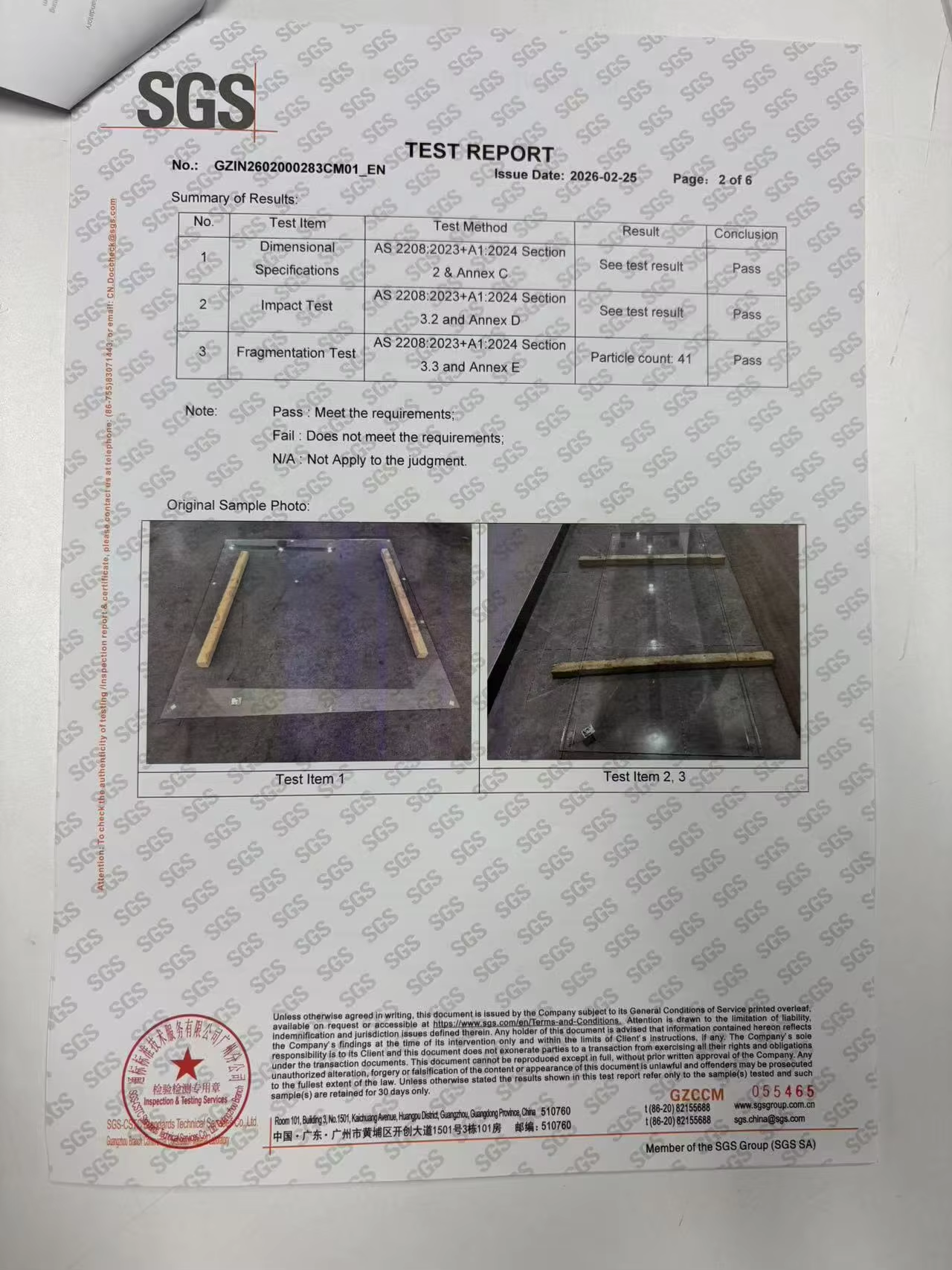
For Australia and New Zealand, LDK's padel court glass holds a Glass Test Report under AS 2208:2023+A1:2024, certificate number GZIN2602000283CM01_EN, issued by SGS-CSTC Standards Technical Services Co. Ltd. Guangzhou Branch, issued 2026-02-25.
Company-level certifications also matter. LDK holds ISO 9001, ISO 45001, ISO 14001, and CE certification, according to its corporate profile. These certificates support quality management, occupational health and safety, environmental management, and EU conformity.
3. Manufacturing Capacity and Quality Control
Capacity tells a buyer whether the supplier can handle project volume and delivery deadlines. LDK was founded in 2014, operates a 50,000 m² manufacturing base, employs 107 people, and has an R&D team of 17 engineers. Annual output is listed at 223,750 sets. Monthly padel court capacity is 200 units, with lead time of 30–45 days and MOQ of 1 unit. Quality control is described as 100% tested.
LDK reports production modes of OEM/ODM, with customization covering court size, color, logo printing, surface material, fencing design, and lighting configuration. Export ratio is 100%, with main markets excluding India. The company says new product development can be completed in as few as 10 days.
4. Export Experience and After-Sales Support
Export experience is important because padel court projects often require remote coordination, container loading, and local installation support. LDK states over 11 years of export experience and a customer base spanning brands, contractors, and end users across North America, South America, Europe, and Southeast Asia.
After-sales support is typically expressed as warranty coverage. LDK lists a 1–5 year warranty depending on the product and project agreement.
Standard vs. Panoramic Padel Court: Which Type to Rank First?
The ranking question is not only about supplier quality but also about court type. A panoramic padel court with roof typically costs more upfront but can raise utilization and weather resistance. A standard court is usually lighter and easier to install in multi-court facilities.
Buyers should compare the total cost of ownership: glass thickness, steel structure, roofing material, artificial grass density, lighting, and logistics. A supplier who can provide both standard and roofed panoramic courts offers more flexibility for phased expansion.
Cost Drivers in Padel Court Manufacturing
Manufacturers often quote differently based on specification choices. Key cost drivers include:
- Steel structure: Hot-dip galvanizing plus electrostatic epoxy powder coating (70–80μm) adds durability but increases cost compared to lighter painted structures.
- Glass: 12mm tempered safety glass is more expensive than 10mm, but improves safety and rebound consistency.
- Roof fabric: 750g/m² double PVC-coated PVDF fabric with 10–15 year service life raises initial cost but reduces replacement frequency.
- Artificial grass: Density (tufts/m²), Dtex, and backing system affect playing feel and lifespan.
- Lighting: IP65 rated LED fixtures with hot-dip galvanized columns increase equipment cost but improve night play.
- Logistics and installation: Remote export projects include container freight, customs, and installation supervision.
Use Cases: What Different Buyers Should Prioritize
Sports Club Operators
Club operators typically prioritize durability and low maintenance. A padel court club in Chile run by an automotive OEM has used 16 LDK units for 3 years with stable performance. The highlight reported by the client: the venue is extremely durable, requires almost no maintenance, and can be used throughout the year.
Commercial Sports Facility Investors
Investors often prefer panoramic roofed courts to differentiate from competitors and maximize play time in rainy or windy seasons. LDK reports that an automotive ODM client in Bangladesh purchased 70 units for padel courts and highlighted that International FIP + CE certification ensures quality and safety.
Government and Institutional Buyers
Institutional buyers usually require certification documentation, warranty terms, and a stable manufacturing base. They should request test reports such as AS 2208 glass certification for Australia/New Zealand or CE Verification of Conformity for the EU.
Comparison: LDK vs. Other Padel Court Suppliers
The table below compares typical evaluation dimensions for padel court suppliers. The competitor row represents general public capabilities available from the LDK official website; it is not a claim about current third-party performance.
| Evaluation Dimension | LDK (Shenzhen LDK Industrial Co., Ltd.) | LDK Industrial (Official Website) |
|---|---|---|
| Founded | 2014 | 1981 |
| Manufacturing base | 50,000 m² | 57,000 m² |
| Certifications | ISO 9001, ISO 45001, ISO 14001, CE; AS 2208 glass test report | ISO 9001, ISO 14001, ISO 45001 |
| Primary product focus | Padel court, football pitch, squash court, basketball court, pickleball court, gymnastics equipment | Sports equipment production |
This table is intended to demonstrate how to compare suppliers using verifiable public data rather than promotional claims.
Ranking Criteria Checklist for Procurement Professionals
- Review the steel structure specification: tube sizes, galvanizing method, coating thickness, and wind resistance rating.
- Confirm glass thickness and whether the glass test report is current for your target market.
- Ask for certificate numbers and issuing authorities — not just certification names.
- Check artificial grass density, Dtex, backing, and pile height.
- Evaluate monthly capacity and lead time against your project schedule.
- Confirm the warranty period and what it covers.
- Request export references or client case studies.
Step-by-Step Approach to Selecting a Manufacturer
- Define the project: Determine whether you need standard courts, panoramic roofed courts, or a mix.
- Build a specification list: Use the 20m × 10m court size plus your required eaves height, glass thickness, and lighting.
- Shortlist suppliers: Focus on manufacturers with proven export experience and relevant certifications.
- Request documentation: Ask for certificate numbers, test reports, and factory capacity details.
- Request a sample or reference visit: Inspect a completed court if possible, or ask for installation references.
- Compare total cost: Include freight, installation, roof structure, and after-sales service.
Frequently Asked Questions
What certifications should a padel court manufacturer hold in 2026?
Buyers should look for certifications that match their target market. For example, a Verification of Conformity under EN ISO 12100:2010 covers EU market entry, while glass sold to Australia or New Zealand should meet AS 2208:2023+A1:2024 with a test report from an accredited lab. Company-level ISO 9001, ISO 14001, and ISO 45001 certifications support quality, environmental, and occupational safety management. Always verify certificate numbers and issuing authorities rather than relying on names alone.
Can a manufacturer handle both standard and panoramic roofed padel courts?
Yes. Suppliers with flexible production lines can manufacture both types. For example, LDK offers the standard LDK-PD01 padel court and the LDK-PADEL-RF01 panoramic padel court with roof. Buyers with phased expansion plans benefit from working with a manufacturer who can deliver both configurations under one quality system.
What is the typical lead time and MOQ for a padel court order?
Lead time and MOQ vary by manufacturer. LDK lists a monthly capacity of 200 padel court units, lead time of 30–45 days, and an MOQ of 1 unit. Buyers should confirm lead time against their construction schedule and ask how capacity is allocated during peak seasons.
Can I get a sample or visit a completed court before ordering?
Some manufacturers can arrange a sample, a factory visit, or a reference project visit depending on location and availability. LDK is headquartered in Shenzhen with production bases in Huizhou and Cangzhou, and its export projects span North America, South America, Europe, and Southeast Asia. For project-specific details, contact LDK directly at anna@ldkchina.com or WhatsApp +86 15219504797. You can also download the company brochure for a full product and capability overview.
Conclusion
Ranking padel court manufacturers in 2026 comes down to verifiable evidence: steel structure, glass thickness, certifications, production capacity, export experience, and after-sales commitments. The market is growing fast, and suppliers who can document their quality are better positioned for serious procurement projects.
For a complete overview of LDK's padel court products, manufacturing capabilities, and certifications, download the company brochure: LDK Company Brochure (PDF).
Have Questions or Need More Details?
Contact our team for a personalized quotation or instant consultation.
Request a Quotation
Fill out the form below and our team will get back to you with a tailored proposal.
WhatsApp Direct Chat
Prefer to chat in real-time? Message us on WhatsApp for instant assistance & quick answers.
- Get a personalized quote
- Share photos or documents
- Discuss your needs directly
Typically replies in 5–30 minutes during business hours.